


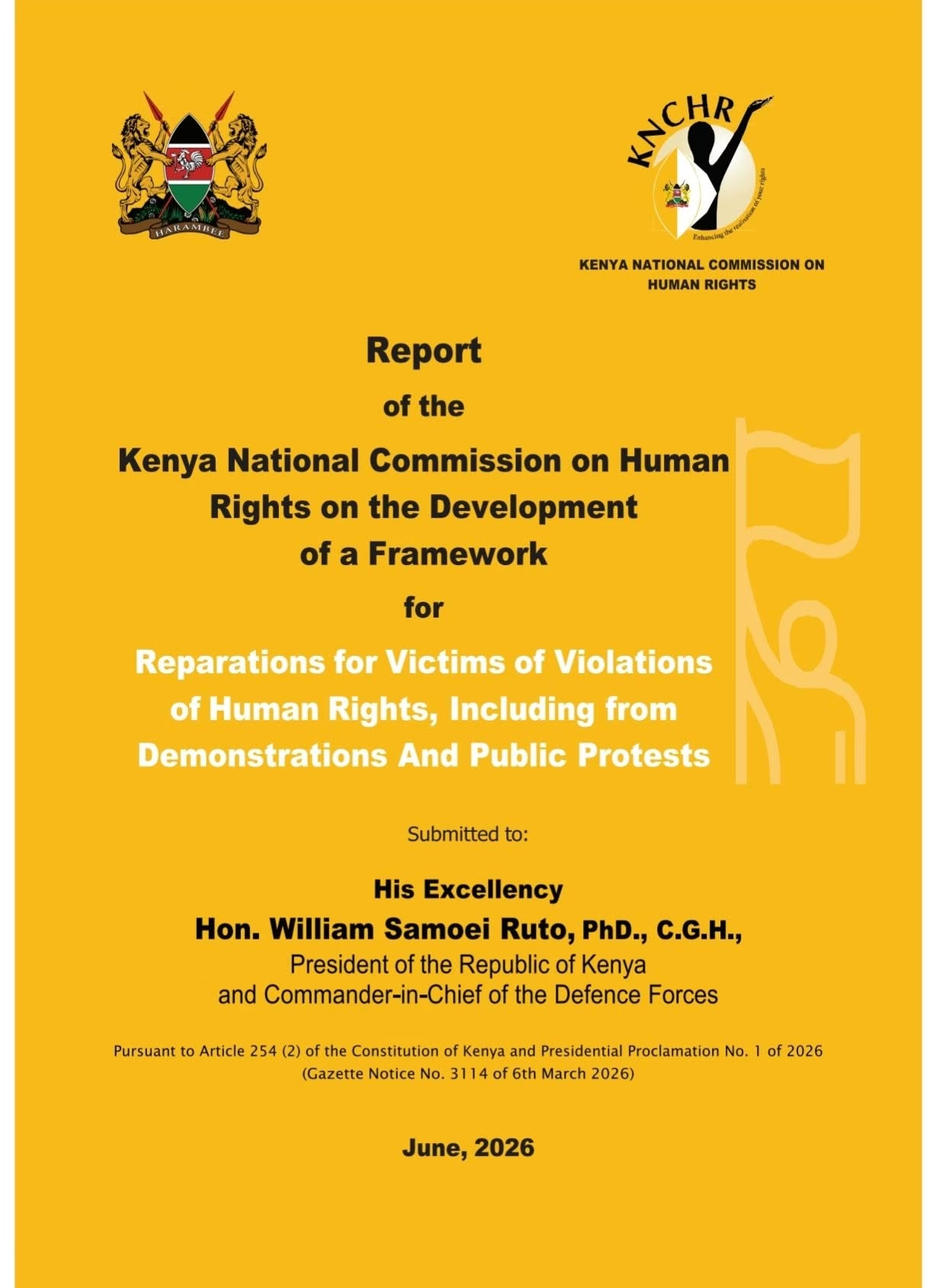
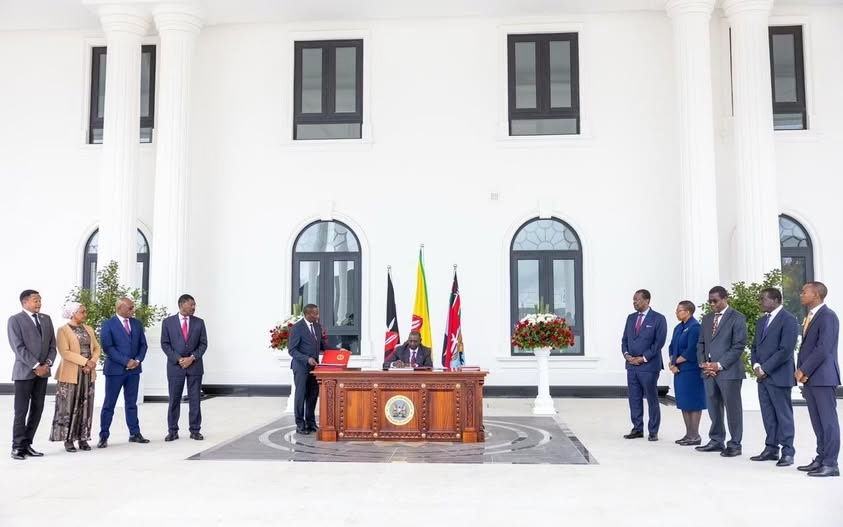
On 5 May 2026, the Kenya National Commission on Human Rights (KNCHR) submitted to President Ruto its Report and draft Reparations Guidelines, prepared under Presidential Proclamation No. 1 of 2026 following the Kerugoya High Court’s consolidated judgment in Petitions E10, E11 and E14 of 2025.
Background
The report follows a turf war over who should lead reparations. In August 2025, Ruto gazetted a 15-member Panel of Experts chaired by Prof. Makau Mutua, with former LSK President Faith Odhiambo as Vice Chairperson
Civil society challenged its legality, arguing the panel’s creation by the Executive contravened the constitutional independence of bodies like IPOA; the Kerugoya court suspended it. Faith Odhiambo resigned on 6th October 2025 citing stalled progress and court challenges. A 4 December 2025 ruling then declared the Executive-appointed panel unconstitutional, holding that the mandate rests with KNCHR
What it says
KNCHR documented 1,815 claims and verified 1,101 victims across six categories (right to life, sexual violence, torture, security of person, property, enforced disappearance), using a “reasonable basis to believe” standard. It proposes a five-pillar UN Basic Principles framework with a compensation schedule (Ksh 2.5m minimum for fatal shootings, Ksh 2m for torture, Ksh 750,000 for rape), plus a Reparations Act, ring-fenced Fund, National Policy, withdrawal of Article 37-related charges, Public Order Act reform, and ICPPED ratification.
Scope: not limited to protests, no time bar
Importantly, the Guidelines are broader than the headline framing suggests. Clause 4 covers “gross, systemic or widespread human rights violations attributable to the State” generally, demonstrations are an included subset, not the whole. Clause 21(7) states explicitly that nothing imposes a limitation period, and the policy recommendations call for eligible categories to include violations from “the colonial period, the post-independence era,” and protests, so a victim from the 1980s could in principle claim, evidentiary gaps permitting.
Malicious prosecution isn’t named as its own category, but isn’t excluded either. It could plausibly fall under “arbitrary arrest and detention” (Ksh 50,000 minimum) or the broad definition of “moral harm” (which includes reputational loss), and the recommendation that the ODPP review and terminate Article 37-related prosecutions speak directly to this harm, though as an accountability measure rather than a compensation entitlement.
Critique and outlook
The architecture is sound, but gaps remain: compensation figures lack indexation or caps; the verified 1,101 is likely a small fraction of the real total with no clear scaling plan; the “interim administrative process” has no timeline or budget; and accountability recommendations (prosecutions, charge withdrawals) have no enforcement teeth, echoing the fate of TJRC recommendations since 2013.
Implementation depends on Parliament passing a Reparations Act and Treasury ring-fencing funds, both discretionary, multi-year asks, and the institutional fight that produced this report already ate eight months of a 60-day timeline.
As for deterrence: compensation addresses harm after the fact. Real deterrence rests on the guarantees-of-non-repetition pillar, Public Order Act reform, mandatory IPOA reporting on lethal force, actual prosecutions, none of which KNCHR can compel. Until those move, the framework’s effect on future protest policing will likely stay limited.
Read the Full Report: To explore the comprehensive framework, detailed compensation schedules, and policy recommendations, you can access the full KNCHR Report and Reparations Guidelines here.




Leave a Reply