


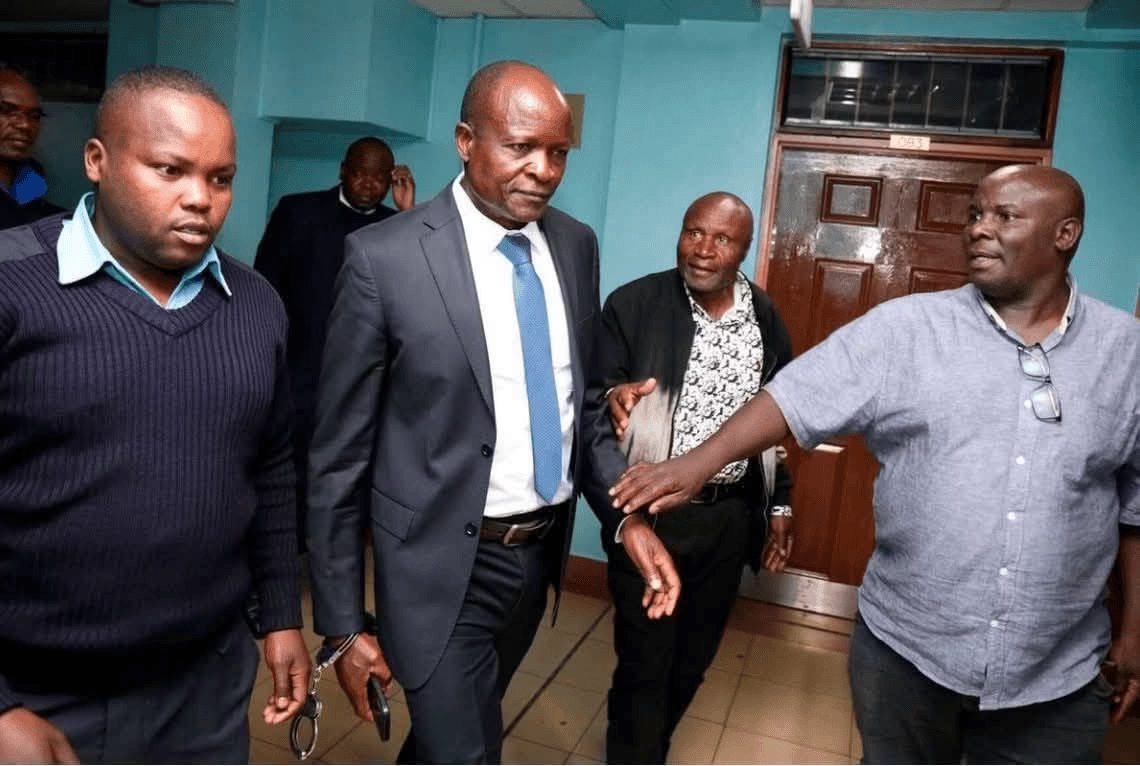
Sharon Otieno’s family can still ask for more than a conviction — but only until 18 August.
On 23 July 2026, Justice Cecilia Githua convicted former Migori Governor Okoth Obado, Michael Oyamo and Caspal Obiero of Sharon’s murder. The three are remanded until 18 August pending a pre-sentence report.
Most people will read the verdict as the end of the story. Legally, it isn’t. There is a second remedy sitting in our statute books that we almost never use — and it can only be asked for at sentencing.
 Penal Code s.31— a person convicted of an offence may be adjudged to pay compensation to any person injured by that offence, in addition to any other punishment.
Criminal Procedure Code s.175(2)— where the court finds that the convict has, by the very act constituting the offence, a civil liability to an injured party, it may order him to pay what could justly be recovered as damages in a civil suit.
Victim Protection Act ss.23 and 26 — a victim has a right to compensation from the offender, and on conviction the court may order it in addition to any other penalty. Under s.25, that order is not part of the sentence and is no bar to civil proceedings.
A “victim” under the Act is any natural person who suffers injury, loss or damage from an offence. Sharon’s parents and dependants qualify.
The vehicle is the victim impact statement — VPA s.12 read with CPC s.329C. It must be before the court on sentencing day. Miss it, and this route closes.
Sharon was killed in September 2018 — nearly eight years ago. A conventional civil claim for loss runs into the three-year limitation period under the Limitation of Actions Act. That window may already have shut, absent leave to extend. A constitutional petition isn’t time-barred, and remains open.

But the criminal court, sitting right now, needs none of that. It already has the facts proved beyond reasonable doubt.
The orders are discretionary . Under s.175(3) it can decline where the evidence on quantum is thin, so the family would need to put real figures before the judge, not just grief. Under s.175(4), an order doesn’t take effect until the appeal window closes or an appeal confirms it — and an appeal here is near-certain. Under s.175(7), whatever is awarded is set off against any later civil claim.
The Victim Protection Trust Fund under s.27 has also never been meaningfully operationalised, so recovery ultimately depends on the convicts’ assets. But an order under VPA s.23(4) is enforceable as a civil judgment, and liability for a joint wrong is joint and several — so the family executes against whoever has property, not against all three equally. Whether much remains to attach is a separate question.
Penal Code s.31 predates independence. Yet our courts hardly ever use these powers in murder cases, and advocates rarely ask for them. So families win the verdict, then start over — fresh suit, fresh fees, fresh years.
That’s a habit, not a legal barrier. This case is as good a place as any to break it.










Leave a Reply