


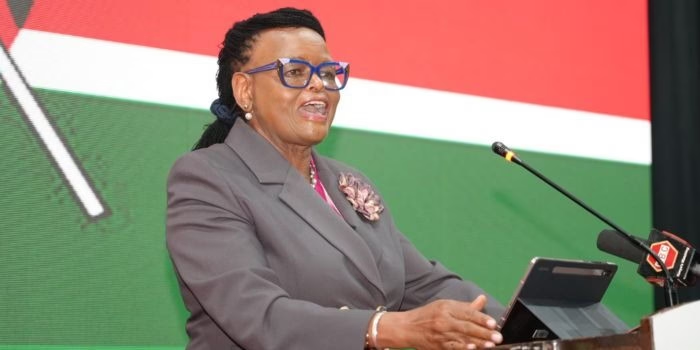
The Judiciary bids farewell to a jurist whose five-decade journey — from the magistracy of the one-party era to the High Court at Eldoret — traces the story of the Kenyan bench itself.
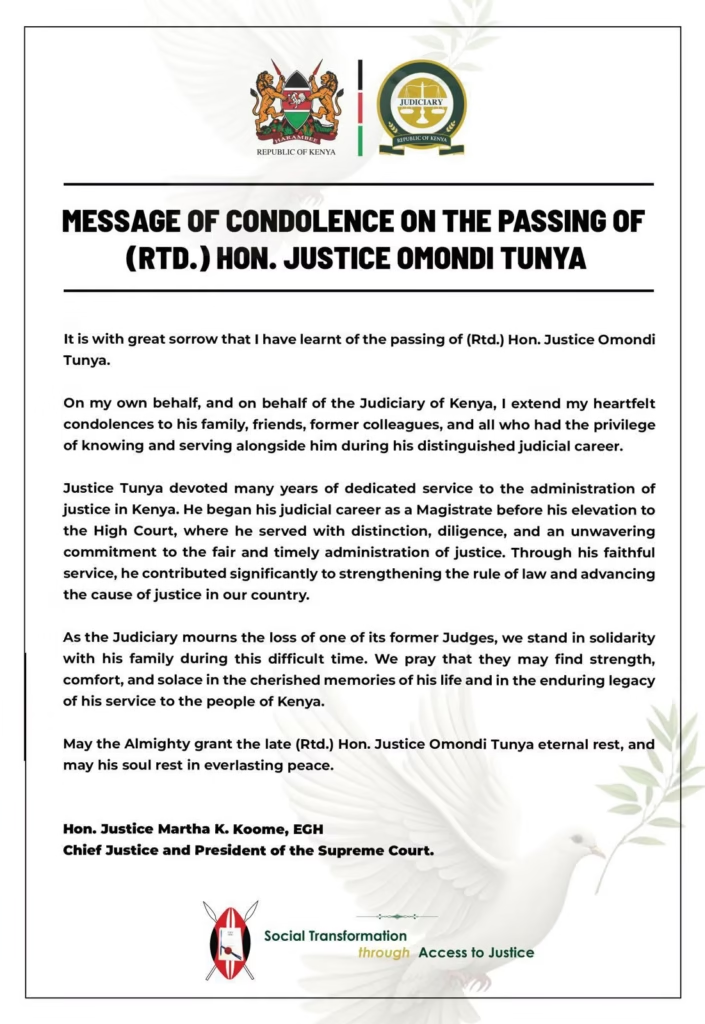
The Judiciary is in mourning. In a message of condolence, Chief Justice Martha Koome announced the passing of retired High Court Judge George Ernest Omondi Tunya, remembering him for decades of “dedicated service to the administration of justice” and extending the institution’s sympathies to his family, friends and former colleagues. It is a dignified farewell to a long-serving jurist — and, inevitably, it has also rekindled memories of the turbulent chapters of Kenya’s judicial history through which his career ran.
 FROM SIAYA TO THE BENCH
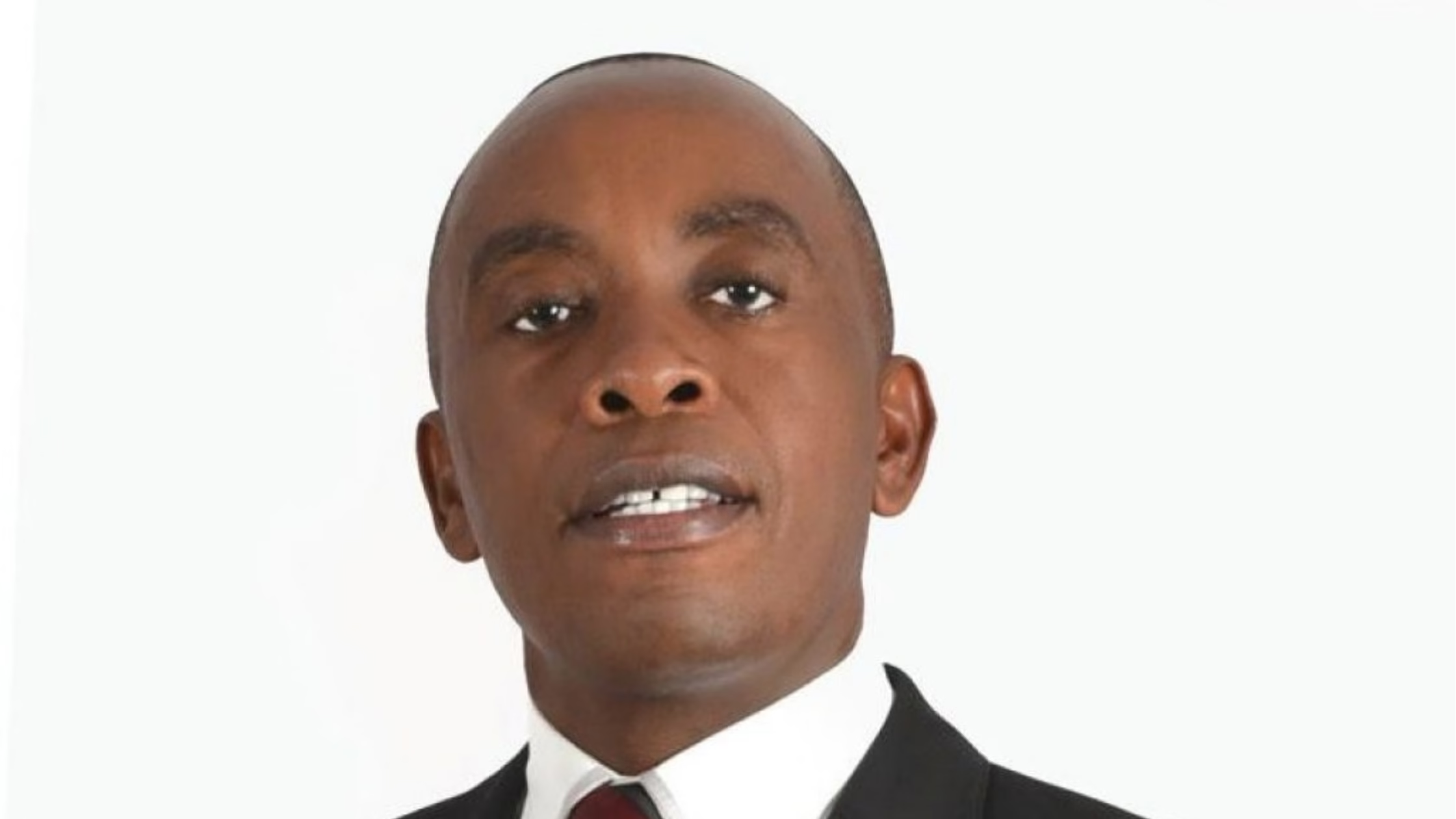
Justice Tunya belonged to a remarkable generation of jurists with roots in Siaya County — a cohort that included retired Chief Justice Bernard Chunga and retired judges Onyango Otieno, Richard Kwach, Muga Apondi and Andrew Hayanga. Like many of his peers, he entered the Judiciary through the magistracy, rising steadily through the ranks in the Kenyatta and Moi years to become Chief Magistrate by about 1990, before his elevation to the High Court, where he served in stations including Eldoret and Kitale.
![]() A COURTROOM AT THE CENTRE OF A HARD ERA
A COURTROOM AT THE CENTRE OF A HARD ERA
It is impossible to tell his story honestly without the 1980s. During the crackdown on the underground Mwakenya movement, Tunya was the magistrate before whom most sedition cases landed, with Bernard Chunga as the state’s chief prosecutor. The pattern is well documented:
suspects interrogated at Nyayo House would emerge with confessions, be arraigned — sometimes late at night — and enter guilty pleas that, under the law of the day, could not be appealed. Within minutes, sentences were passed. Dozens of academics, students, lawyers and perceived dissidents were imprisoned this way. For survivors of that era, his courtroom is remembered as the final stop in the machinery of state repression — not because he was ever adjudged corrupt, but because the bench he occupied lent legal form to an authoritarian project.
His docket in those years was not only political. In 1987, as Principal Magistrate, he tried and sentenced Duncan Wahome Wamae to death for robbery with violence in the case arising from the 1985-night attack at the Naro-Moru farmhouse of Senior Resident Magistrate John McReady, in which McReady and his wife were killed. The conviction, built on circumstantial evidence and vigorously contested, was upheld by the High Court in 1991 and by the Court of Appeal in 1998.
“Both registers are true, and neither cancels the other. His story is, in miniature, the story of the Kenyan bench itself.”
![]() A FLASH OF INDEPENDENCE
A FLASH OF INDEPENDENCE
Yet his record resists a single reading. Presiding over the inquest into the 1996 murder of human rights activist Karimi Nduthu, Tunya openly expressed “surprise” at the refusal of the police to follow clear leads, criticized the shallowness of the investigation, declined to either exonerate or indict the government without proper inquiry, and named two individuals he believed had a case to answer. Coming from a man so associated with the state’s courtrooms, it was a ruling of unexpected independence — one the police, tellingly, never acted upon.
![]() THE HIGH COURT YEARS
THE HIGH COURT YEARS
On the High Court bench, principally at Eldoret, his work was largely workmanlike and respected. He handled a broad civil, commercial, land and criminal appellate docket, and several of his rulings entered the citation stream: a 2002 defamation judgment awarding substantial damages against the East African Standard for injuring the reputations of two advocates; a burial dispute in which he applied Tugen customary law, holding that land ownership does not determine a burial place, in the tradition of the S.M. Otieno line of cases; and procedural rulings that fellow judges expressly adopted. His decisions are still cited in Kenyan courts today.
![]() THE 2003 PURGE AND A QUIET EXIT
THE 2003 PURGE AND A QUIET EXIT
His judicial career ended amid the most dramatic shake-up the Kenyan bench has known. In October 2003, he was reportedly among the judges named in the report of the Integrity and Anti-Corruption Committee chaired by Justice Aaron Ringera — the “radical surgery” that cited sweeping allegations of unethical conduct and corruption across the Judiciary. Like a number of
his colleagues, he is reported to have opted for retirement with benefits rather than face the disciplinary tribunal, leaving the allegations against him forever untested. It was a quiet exit — and, in the way of that exercise, an ambiguous one, since the purge itself was later criticized for its rough justice.
Retirement did not remove him from the law. He continued to serve as an arbitrator in commercial disputes — at one point, in an irony history could not resist, sitting on a tribunal alongside retired Justice Ringera himself. He also made headlines in October 2013 when, according to press reports, a four-man gang armed with an AK-47 blocked his car near his Mamlaka Road residence in Nairobi’s Kilimani area and robbed him of his licensed pistol; he escaped unhurt.
JUSTICE OMONDI TUNYA — AT A GLANCE
| Roots | Siaya County — among a storied generation of Siaya-born jurists |
| Career path | Magistrate → Chief Magistrate (c. 1990) → Judge of the High Court (Eldoret, Kitale) |
| Defining era | Presided over the Mwakenya-era sedition arraignments of the 1980s |
| Notable rulings | Karimi Nduthu inquest (1996 murder); Standard defamation award (2002); Tugen burial-custom appeal |
| Exit | Reportedly named in the 2003 Ringera “radical surgery” report; opted for retirement |
| After the bench | Commercial arbitrator; mourned by the Judiciary in 2026 |
![]() A LEGACY IN TWO REGISTERS
A LEGACY IN TWO REGISTERS
How, then, to remember him? Officially, as the Chief Justice’s tribute does: a diligent jurist who rose from the magistracy to the High Court and gave the country decades of service, whose judgments strengthened procedure and are cited still. Historically, as a figure whose career straddled — and in part embodied — the Judiciary’s most compromised era: the sedition trials of the one-party state, and the credibility crisis whose repudiation ultimately drove the judicial reforms entrenched in the 2010 Constitution. Both registers are true, and neither cancels the other. His story is, in miniature, the story of the Kenyan bench itself: its capture, its complicity, its flashes of courage, and its long walk toward reform.
To his family, friends and former colleagues, who mourn not a chapter of history but a father, husband and friend, we extend our sincere condolences. May the Almighty grant the late (Rtd.) Hon. Justice Omondi Tunya eternal rest.
Commentary and tributes reflect the editorial position of Legal Express Kenya. Historical claims are drawn from court records, press archives and human rights reports.








Leave a Reply