


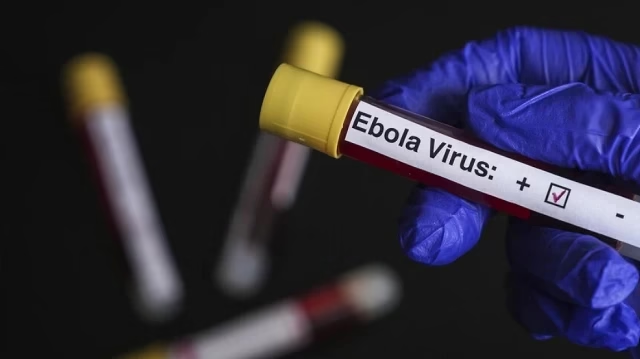
In a major legal blow to controversial international health arrangements, the High Court of Kenya has temporarily frozen a reported advanced agreement between Nairobi and Washington. The deal allegedly aimed to establish specialized quarantine and isolation sites within Kenya for American citizens and foreign nationals exposed to the deadly Ebola virus.
A Secretive Deal Under Fire
Prominent rights and constitutional advocacy group, Katiba Institute, moved to court to sue the Attorney-General (State Law Office) and the Health Cabinet Secretary. The lobby group claims that the high-stakes plan was negotiated in absolute secrecy, bypassing critical statutory requirements. According to the petition, the deal completely lacked:
- Parliamentary oversight and approval
- Public participation and stakeholder engagement
- Rigorous environmental and public health risk assessments
- Transparent disclosure of the bilateral terms
Katiba Institute strongly warned against turning Kenya into an “offshore quarantine center for foreign states.” They highlighted a glaring logistical and infrastructural deficit: Kenya currently possesses only three facilities capable of testing for Ebola and entirely lacks a top-tier Biosafety Level 4 (BSL-4) maximum containment laboratory. The petitioner’s stance remains clear and uncompromising: US Ebola cases should be managed and treated within the United States, where medical infrastructure is far superior and better equipped for high-consequence pathogens.
Court Certifies Matter Urgent, Issues Freeze Orders
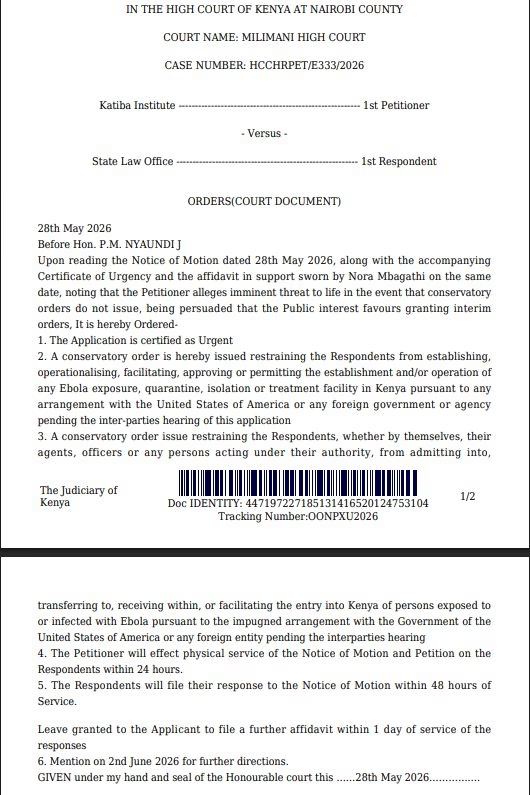
Presiding Judge, Hon. Justice P.M. Nyaundi, certified the matter as extremely urgent on May 28, 2026. Recognizing an imminent threat to life if conservatory intervention was delayed, the court issued sweeping interim orders that:
- Bar the Government from establishing, operationalizing, facilitating, or approving ANY Ebola exposure, quarantine, isolation, or treatment facility tied to the United States or any foreign government entity.
- Bar Entry into Kenya of any persons exposed to or infected with the Ebola virus under the impugned bilateral arrangement.
- Compel State Response, giving the Respondents strict timelines to file their responses within 48 hours of service.
The next inter-parties mention is scheduled for Tuesday, June 2, 2026, for further directions.
What Lies Ahead: Diplomacy vs. Constitutionalism
It is vital to emphasize that these conservatory orders act as a temporary freeze rather than a final judgment. Until the constitutional questions are fully argued and determined, the government is legally prohibited from executing any facet of this arrangement. Disobeying these orders carries severe penal consequences, including contempt of court.
This judicial intervention is bound to spark diplomatic friction between Nairobi and Washington, especially if the deal was structured on a quid pro quo basis (“I scratch your back, you scratch mine”). Observers are now watching closely to see how the State Law Office responds and whether the executive will fully comply with the rule of law.










Leave a Reply