


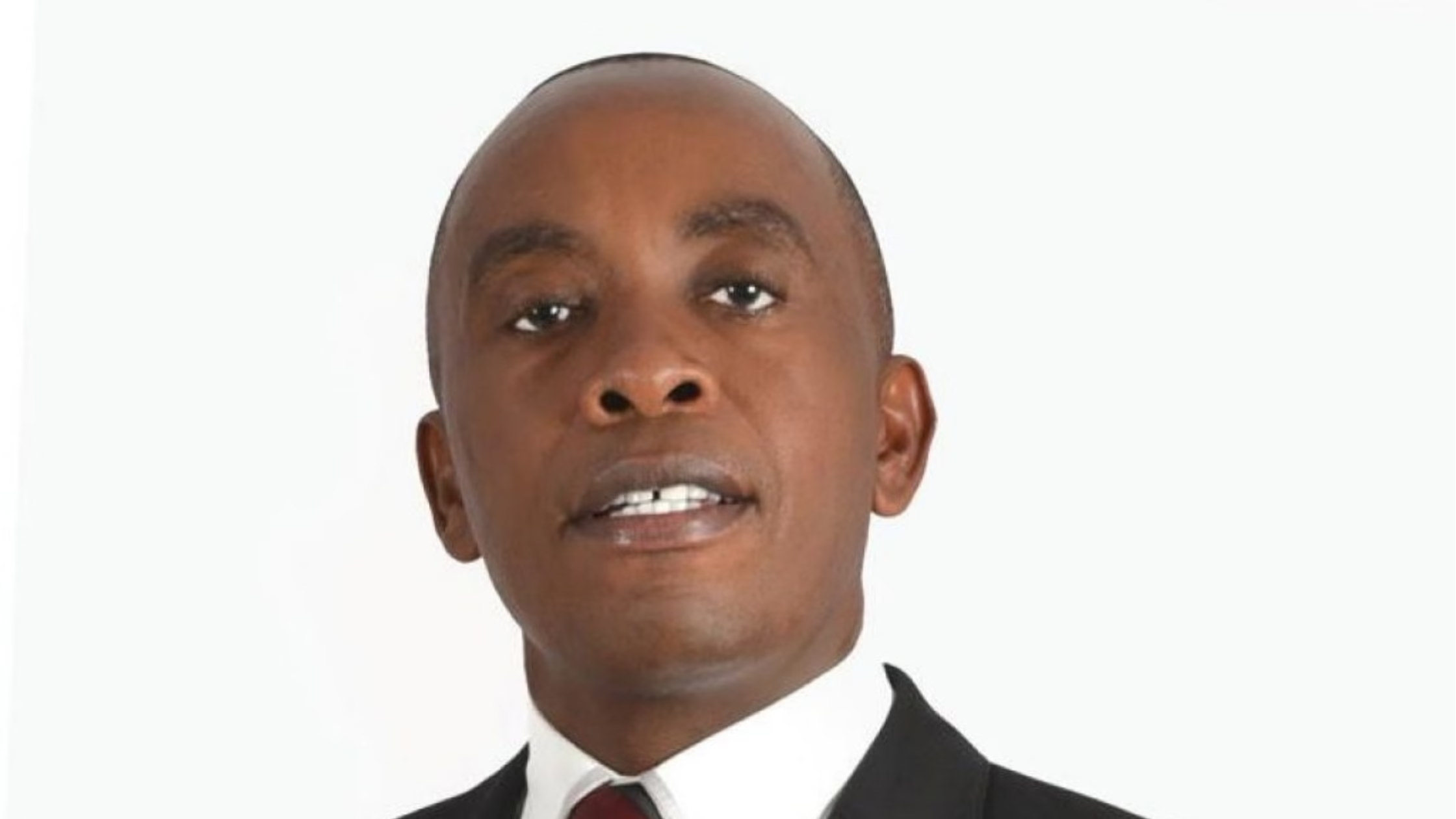
You Can’t Hide Behind Corporate Veil to Stop Corruption Suits: High Court Deals Blow to Governor Wamatangi and Co-Defendants in Ksh 813 Million EACC Case
In a decisive ruling handed down at the Milimani High Court, Lady Justice Rose Ougo has dismissed five separate applications brought by Kiambu Governor Paul Kimani Wamatangi and 12 other defendants seeking to strike out an Ethics and Anti-Corruption Commission (EACC) civil suit.
The EACC is seeking the recovery and forfeiture of Ksh 813,145,532.40 allegedly tied to fraudulent public road tenders.
The ruling in ACEC Civil Suit No. E042 of 2025 sets a clear precedent on corporate liability, parliamentary immunity, and the limits of preliminary objections in anti-corruption litigation.
Background: The Ksh 813 Million Road Tender Dispute
The suit stems from investigations conducted by the EACC into tenders awarded by state road authorities—including the Kenya Urban Roads Authority (KURA), Kenya Rural Roads Authority (KeRRA), and Kenya National Highways Authority (KeNHA).
According to court filings:
- The Allegations: The EACC alleges that corporate entities (the 2nd to 6th Defendants) submitted forged or falsified bid documents to fraudulently demonstrate financial and technical capacity, winning public road contracts worth over Ksh 813 million.
- The Role of Governor Wamatangi: The Commission contends that Governor Wamatangi, during his tenure as Chairperson of the Senate Standing Committee on Roads, Transport and Housing, used his position to influence tender awards and engaged in conflict of interest. EACC further alleges that Wamatangi was a beneficial owner, a bank signatory for the corporate entities, and received direct transfers into his Parliamentary Sacco account.
- The Co-Defendants: Corporate directors and close associates were joined as defendants, with EACC asserting they acted as proxies and instruments in the alleged scheme.
The Defendants’ Push to Strike Out the Suit
All 13 defendants mounted a multi-pronged defence, asking the High Court to throw out the case before it could go to full trial:
- Governor Wamatangi’s Defence: Wamatangi argued that he was never a director of the subject companies, did not submit tender applications, and never communicated with road agency officials. He claimed immunity under Sections 11 and 12 of the Parliamentary Powers and Privileges Act, asserted the suit was politically motivated to damage his re-election bid, and claimed the matter was sub judice to Constitutional Petition No. E455 of 2025.
- The Corporate Directors’ Argument: Directors of companies like Lub Plus Oil and Energy Co. Ltd argued misjoinder. Citing the foundational corporate law principle in Salomon v Salomon & Co. Ltd, they argued that companies possess separate legal personalities. They asserted that the EACC failed to specifically plead individual acts of fraud warranting the “lifting or piercing of the corporate veil.”
How the Court Ruled: Key Takeaways
Lady Justice Rose Ougo systematically addressed and rejected each argument raised by the Applicants.
1. Parliamentary Privilege Does Not Cover Unlawful Personal Conduct
Addressing Wamatangi’s claim of parliamentary immunity, the court reiterated established constitutional principles: legislative privileges exist to protect the House’s independent function, not to set individual members above the law.
“The allegations against him are not privileged and therefore do not warrant protection, as they do not and cannot impede the functions in question. Accordingly, I find that sections 11 and 12 of the Parliamentary Powers and Privilege Act are inapplicable…” — Lady Justice Rose Ougo
2. Sub Judice Defence Rejected
The court held that Wamatangi failed to prove that Constitutional Petition No. E455 of 2025 involved identical parties and issues. While the constitutional petition dealt with prohibiting criminal prosecution by the ODPP, the current suit focuses strictly on civil forfeiture and restitution of public funds.
3. Lifting the Corporate Veil at the Preliminary Stage
On whether company directors could be struck out under corporate distinctiveness, Justice Ougo noted that the threshold for striking out pleadings at a preliminary stage is extraordinarily high. Citing D.T. Dobie & Company (Kenya) Ltd v Muchina, the judge held that where allegations of fraud, misrepresentation, and falsification of documents exist, the court must hear evidence tested through cross-examination rather than summarily dismissing claims.
The court concluded that the pleadings drawn by the EACC were not “so hopeless” as to be struck out without a full trial, reserving final determination on personal liability for the main trial hearing.
Summary of Court Orders
- Application dated 2nd January 2026 (1st Defendant – Wamatangi): Dismissed.
- Application dated 11th February 2026 (7th, 9th & 12th Defendants): Dismissed.
- Application dated 12th February 2026 (10th Defendant – Faith Wambui Njeri): Dismissed.
- Application dated 12th February 2026 (4th, 5th, 8th, 12th & 13th Defendants): Dismissed.
- Application dated 5th March 2026 (3rd & 11th Defendants): Dismissed.
- Costs: Ordered to be in the cause.
What This Means Going Forward
This ruling paves the way for a full trial in ACEC Civil Suit No. E042 of 2025, where the EACC will be required to present oral and documentary evidence proving beneficial ownership, conflict of interest, and bid falsification.
For state officers and corporate directors in Kenya, the High Court’s ruling re-emphasizes that neither parliamentary privilege nor corporate registration offers an automatic shield against civil anti-corruption proceedings when allegations of fraud and unjust enrichment are on the table.
Want to review the judge’s full analysis line by line? Read the entire 19-page ruling on Legal Express Kenya here






Leave a Reply