


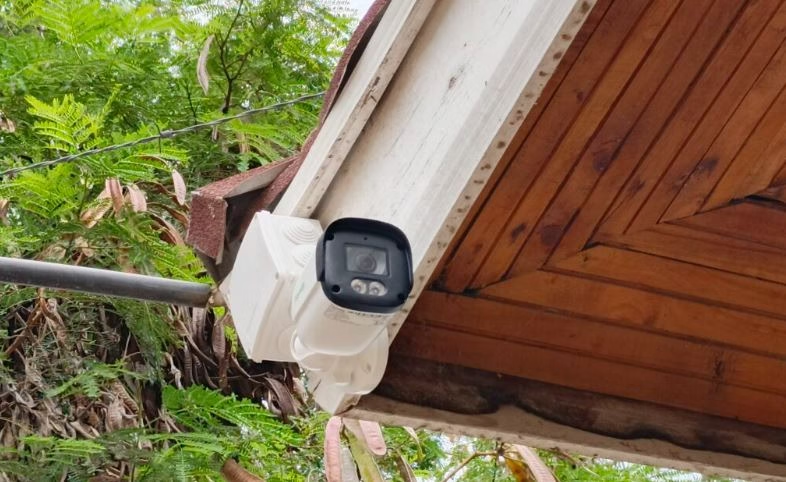
In a decision that will resonate in neighborhoods across Kenya, the Office of the Data Protection Commissioner has delivered a powerful message about the limits of home security and the sanctity of personal privacy. A recent complaint between neighbors over the positioning of security cameras has resulted in a landmark determination, establishing that the right to privacy within one’s home cannot be overridden by another’s security concerns.
The Heart of the Matter: Cameras Pointed Next Door
The case began when Lilian Nyawira Nderitu and John Gitahi Mureithi filed a formal complaint against their neighbors, Josephat Karungo and Freshia Mugo Waweru. The complainants alleged that CCTV cameras installed on the respondents’ property were deliberately positioned to peer into their private residence. They described a profound invasion of privacy, with cameras capturing intimate spaces like their kitchen and the surrounding areas of their home. This constant surveillance, they argued, robbed them of a sense of safety and peace, leading to significant anxiety and emotional distress.
The Legal Backdrop: Kenya’s Framework for Privacy
The complaint was not merely a neighborhood quarrel but a formal legal action grounded in Kenya’s strong data protection laws. The case drew its authority from Article 31 of the Constitution, which explicitly guarantees the right to privacy. This fundamental right is given practical effect by the Data Protection Act of 2019. This law established the Office of the Data Protection Commissioner and set forth clear principles that anyone handling personal data must follow. These principles, found in Section 25 of the Act, require that data processing be lawful, fair, and limited to what is necessary for a specific, legitimate purpose.
The Defense: Security Concerns and Goodwill Gestures
In their response, the respondents firmly denied any wrongdoing. They maintained that the cameras were installed solely for security purposes following an attempted burglary, a legitimate concern for any homeowner. They emphasized that they had voluntarily adjusted one camera in July 2025 as a gesture of goodwill after a meeting with local community leaders. They portrayed their actions as reasonable and the complaint as being without merit, stating they had never intended to infringe upon their neighbors’ privacy.
The Commissioner’s Findings: A Failure of Duty and Proportion
However, the Data Commissioner’s investigation revealed critical failures in the respondents’ actions. While security is recognized as a legitimate interest under the Data Protection Act, the Commissioner stressed that it must be pursued proportionally. The investigation found that the respondents had not taken basic steps during installation to ensure their cameras did not monitor their neighbors’ property. The very fact that a camera needed to be repositioned later was seen as clear evidence that its original scope was excessively intrusive.
The ruling also pointed to a significant delay in addressing the complainants’ concerns. The law grants individuals the right to have excessive data processing rectified without undue delay, with supporting regulations specifying a 14-day timeframe for a response. The evidence showed the complainants had raised the issue multiple times over nearly a year, through direct requests and even legal channels, before any corrective action was taken. This prolonged period of inaction was itself a violation of the complainants’ rights under the Act.
The Outcome: Compensation and a Clear Precedent
Finding the respondents liable for infringing upon the complainants’ right to privacy, the Data Commissioner ordered a remedy. The respondents were directed to pay the complainants compensation of two hundred thousand Kenyan shillings. This award, permitted under Section 65 of the Data Protection Act, acknowledges that the damage from privacy violations includes non-financial harm like distress and psychological impact. An enforcement notice was also issued to ensure the respondents’ future compliance with the law. See more HERE















Leave a Reply