


Introduction and Facts
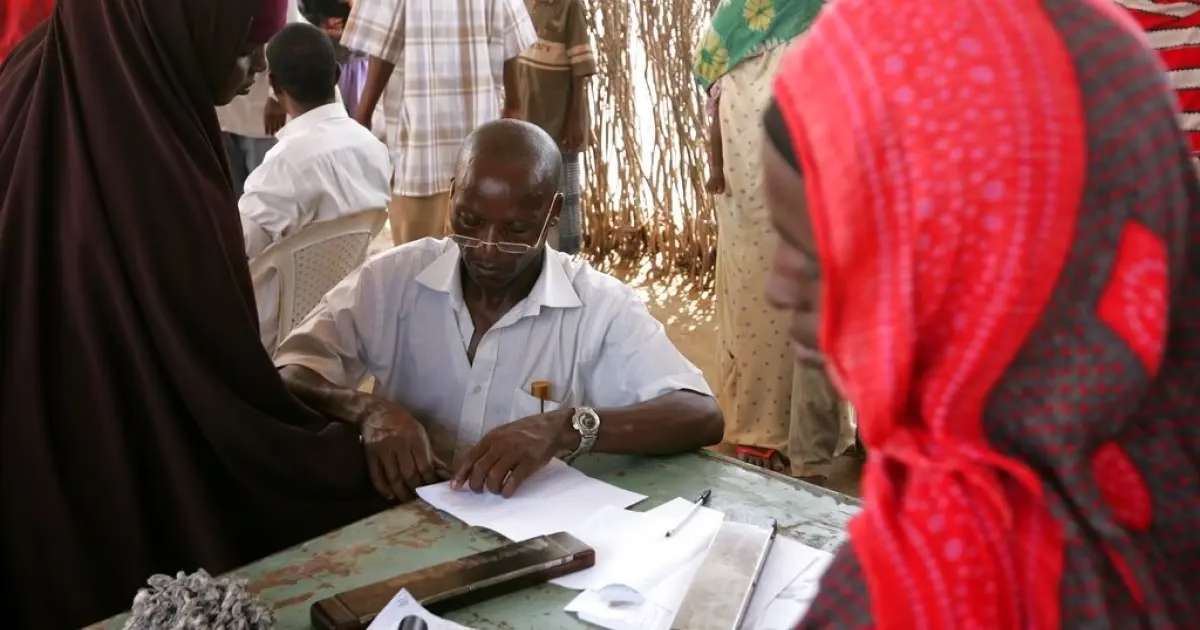
Haki na Sheria Initiative filed a Petition in the High Court at Garissa on behalf of children born to Kenyan fathers and refugee mothers. These children received birth certificates stamped “Refugee” and were registered in the refugee database, despite one parent being Kenyan. The petitioners argued that this wrongly denied the children full citizenship rights under the Constitution and the Births and Deaths Registration Act. They named the Ministry of Interior, Immigration Services, the Registrar of Births and Deaths, the Refugee Affairs Commission, and the Attorney General as respondents.
The Katiba Institute sought to join the petition in January 2024. By June 2024, the court had also consolidated this case with Petition E001 of 2023, expanding the scope to similar cases and allowing expert evidence critical to the outcome.
Issue
Does the registration of these children as refugees violate their constitutional and statutory rights to citizenship through their Kenyan fathers? Should their birth notifications and certificates be corrected, and should the refugees’ registration entries be removed?
Rule
Every child born in Kenya to a Kenyan father is a citizen by birth under Article 14(1) of the Constitution. The Births and Deaths Registration Act mandates accurate registration and timely issuance of citizenship documents. Registration as a refugee restricts access to fundamental rights and conflicts with constitutional guarantees of fair administrative action.
Application
The petitioners showed that refugee-stamped documents led to real harm: denial of identity cards, passports, education, healthcare, banking, and employment. The court accepted that stamping a Kenyan child as a refugee ignored constitutional citizenship rules and violated Article 47 by subjecting them to unfair administrative processes.
Katiba Institute’s application to join strengthened the case by adding expertise and relevance. The reinstatement of an expert affidavit by Mr. Abiy Ashenafi helped demonstrate systemic issues in the vetting process. The consolidation with E001 of 2023 underscored the widespread impact, affecting potentially hundreds of thousands in similar circumstances.
The government failed to justify why birth certificates issued by civil registrars were followed by refugee stamps and database entries. The court found no lawful basis for this practice and concluded it denied the children their full rights as citizens.
Held
The court on 17th July, 2025, ruled that children born in Kenya to a Kenyan father—even if their mother is a refugee—must be registered as citizens, not refugees. It held that stamping their documents as refugees was unconstitutional and unlawful. The court ordered that the refugee stamp be removed, birth certificates be corrected, and entries in the refugee database be annulled. The Ministry of Interior, Immigration Services, Registrar, Refugee Commission, and Attorney General must issue unmarked birth certificates and national identity documents to affected children. They must also report back on compliance within specified timelines.
Finally, this judgment enforces a clear rule: one parent’s refugee status cannot override a child’s citizenship by birth. It affirms that administrative errors cannot strip constitutional rights. It requires immediate corrective actions and marks a significant step toward restoring rights to children affected by double registration. Read the whole case file HERE









Leave a Reply