


Core Elements of the Agreement
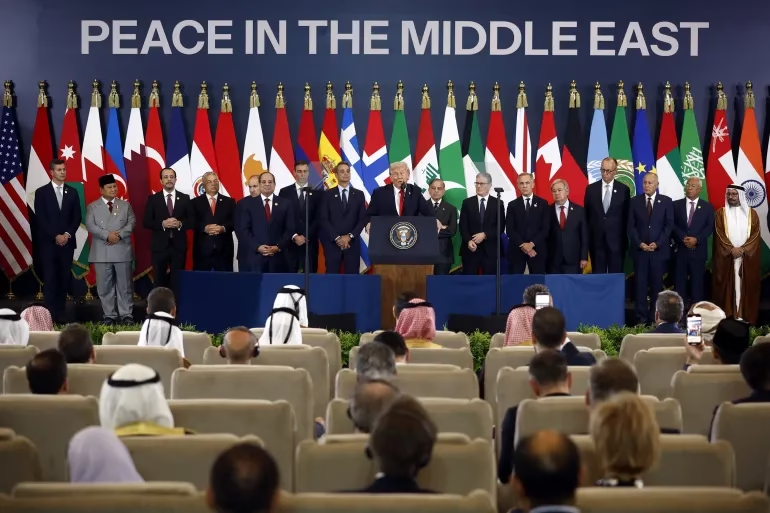
The 2025 peace agreement between Israel and Hamas marks a pivotal moment in the history of the Middle East conflict. This treaty establishes a permanent cessation of violence and creates a clear roadmap for Palestinian self-governance and regional security. The accord was reached after prolonged multilateral talks and is built upon several fundamental components designed to address the root causes of the conflict.
The agreement requires an immediate and complete end to all armed hostilities. This includes a permanent stop to rocket fire and aerial bombardments. A central condition is the safe return of all captives and detainees held by each side. This exchange is being managed by international observers and is being executed in verified stages to guarantee full compliance.
On the matter of governance, the deal allows for the creation of an interim Palestinian authority with defined self-rule powers in Gaza. This body is responsible for the reconstruction of critical infrastructure and for overseeing the flow of humanitarian assistance. The text further requires that democratic elections for a new Palestinian leadership be conducted within twenty-four months under the supervision of agreed upon international monitors.
Regarding security the accord details a complete process for the disarmament of Hamas and other militant groups operating within Gaza. This will be enforced by a multinational security force. In exchange Israel has agreed to a staged pullback of its defense forces from the Gaza territory and to a major reduction of its economic siege permitting the unrestricted transit of individuals and commercial products.
Legal Foundations for the Accord
This peace treaty is anchored in well-established international legal standards. It derives its authority primarily from the United Nations Charter specifically the provisions in Chapter Six which detail the peaceful resolution of conflicts. The agreement also calls upon the core tenets of international humanitarian law as embodied in the Geneva Conventions which outline the duties for protecting noncombatants during and following periods of war.
The deal further cites essential United Nations Security Council resolutions that have long guided diplomatic efforts. These include Resolution 242 which underscores the principle that land cannot be acquired through military force and advocates for a fair and lasting peace and Resolution 338 which demands negotiations to achieve such a peace. The agreement presents itself as the practical fulfillment of these enduring international legal directives.
Official Documents and Texts
The principal source for the terms of this agreement is the complete text of the treaty officially named the 2025 Israeli Hamas Peace Accord. This document is filed with the United Nations Secretariat in accordance with Article 102 of the UN Charter granting it formal status and legal weight under international law.
Next Steps;
The effective execution of this agreement now relies on the sustained dedication of both sides to its stipulations and the consistent monitoring by the global community.










Leave a Reply