


More Kenyans are living their lives online—using mobile money, applying for jobs on websites, chatting on social media, attending school virtually, and even accessing government services through apps. While technology has brought many benefits, it has also opened doors for misuse of personal information, online crime, and digital abuse.
To protect everyone in this new environment, Kenya has updated its laws over time. The Constitution of Kenya, 2010, recognized the right to privacy as a fundamental freedom. Later, the Data Protection Act 2019 was passed to regulate how organizations collect and use personal information. The Computer Misuse and Cybercrimes Act, 2018, followed, making it illegal to commit fraud, harassment, or abuse online. These laws now help to protect digital rights just as much as physical ones.
The right to digital privacy is in the Constitution
The Constitution protects the privacy of every Kenyan under Article 31. This includes the privacy of your home, family, communications, and personal data. In the past, privacy meant no one should open your letters or search your house without a reason. Today, it includes your emails, messages, phone location, and browsing history.
This means that even though you are using your phone or computer, your details are still protected by law. No one—whether a company, government agency, or individual—has a right to collect or share your personal information without a legal reason or your consent.
The Data Protection Act explains how your data should be handled
Before 2019, many organizations in Kenya could collect people’s data without any clear rules. The Data Protection Act changed this by introducing strict guidelines on what can be done with your personal information.
According to the law, you have the right to know why someone is collecting your data, how long they will keep it, who they might share it with, and what they will use it for. You also have the right to say no, ask them to correct wrong information, or request that it be deleted.
The Office of the Data Protection Commissioner (ODPC) was created to make sure these rules are followed. You can report to the ODPC if you think your data was misused, for example, if your phone number is sold without permission or your medical details are exposed.
Surveillance, CCTV, and phone tracking must follow the law
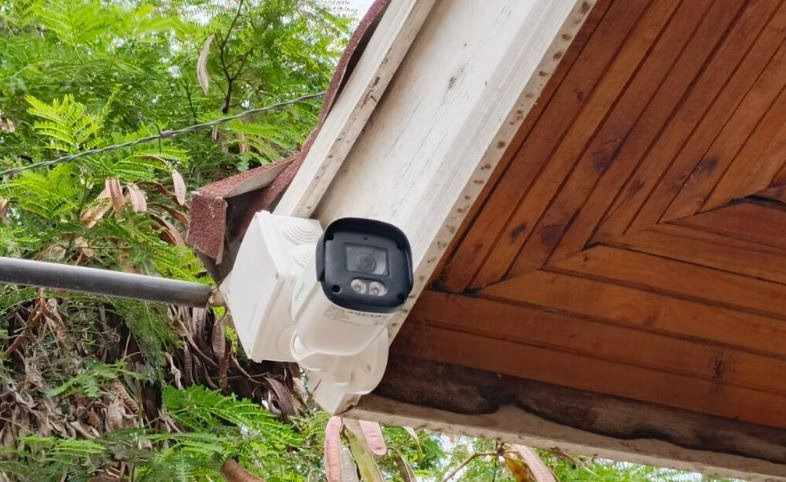
Sometimes the government or private organizations install CCTV cameras or tracking phones to improve security. This may be allowed by law, but it must be done with care and respect for people’s rights.
If CCTV cameras are placed in public areas, there should be signs to inform people. Cameras should not be hidden in places like washrooms or private offices. Similarly, police and state agencies cannot track your phone, listen to calls, or read your texts unless they follow the correct legal procedure, such as getting a court order.
Kenyan courts have warned that security cannot be used as an excuse to violate constitutional rights. Even in criminal investigations, the law must be respected.
Online abuse, defamation, and cyberbullying are criminal offences
With the rise of social media, online abuse has become common. But Kenyan law does not allow it. The Computer Misuse and Cybercrimes Act makes it a criminal offence to:
- Send threatening, abusive, or insulting messages online
- Spread false stories about someone to damage their name
- Hack into someone’s account or impersonate them
- Share private photos or conversations without permission
- Use fake accounts to defraud others
If you are a victim of cyberbullying or defamation, you can report to the Directorate of Criminal Investigations (DCI) or your nearest police station. You can also go to court to stop the abuse or demand an apology.
Freedom of expression online has limits under the law
Everyone has a right to express their opinions, even on social media. However, this right is not unlimited. Under Article 33 of the Constitution, freedom of expression does not allow hate speech, incitement to violence, or spreading lies about others.
This means that insulting someone because of their tribe, religion, gender, or background is not protected speech. Similarly, making false accusations during elections or posting harmful rumors can land someone in legal trouble.
The courts have ruled that while people can criticize leaders and public policy, they must not break the law or violate the rights of others while doing so.
If your identity is stolen or you’re defrauded online, take action quickly
Identity theft is when someone uses your personal information—like your ID number, bank details, or mobile phone line—to pretend to be you. This can lead to fraud, loss of money, or even damage to your reputation.
If this happens:
- Report to your mobile network or bank immediately
- Make a report at your local police station or the cybercrime unit
- Contact the Kenya Computer Incident Response Team (KE-CIRT/CC)
- Inform the ODPC if your information was leaked by a company
Acting quickly can stop further damage and help you recover what was lost. It also helps to keep evidence such as screenshots, transaction records, or suspicious messages.
In summary, everyone has rights and responsibilities in the digital space
As Kenya continues to grow digitally, the law is evolving to protect everyone’s rights online. Whether you are a student using WhatsApp, a trader using M-PESA, or a parent accessing health services, your data and dignity deserve protection.
But just as you have rights, you also have responsibilities. Use the internet wisely, report wrongdoing, respect others online, and be cautious with your details.
When people understand their digital rights and demand accountability, the entire country benefits—one click at a time.












Leave a Reply