



A new constitutional battle is quietly unfolding in the High Court in Nairobi, and it touches on a question that affects every Kenyan road user: Can the government impose instant traffic fines without going through the courts?
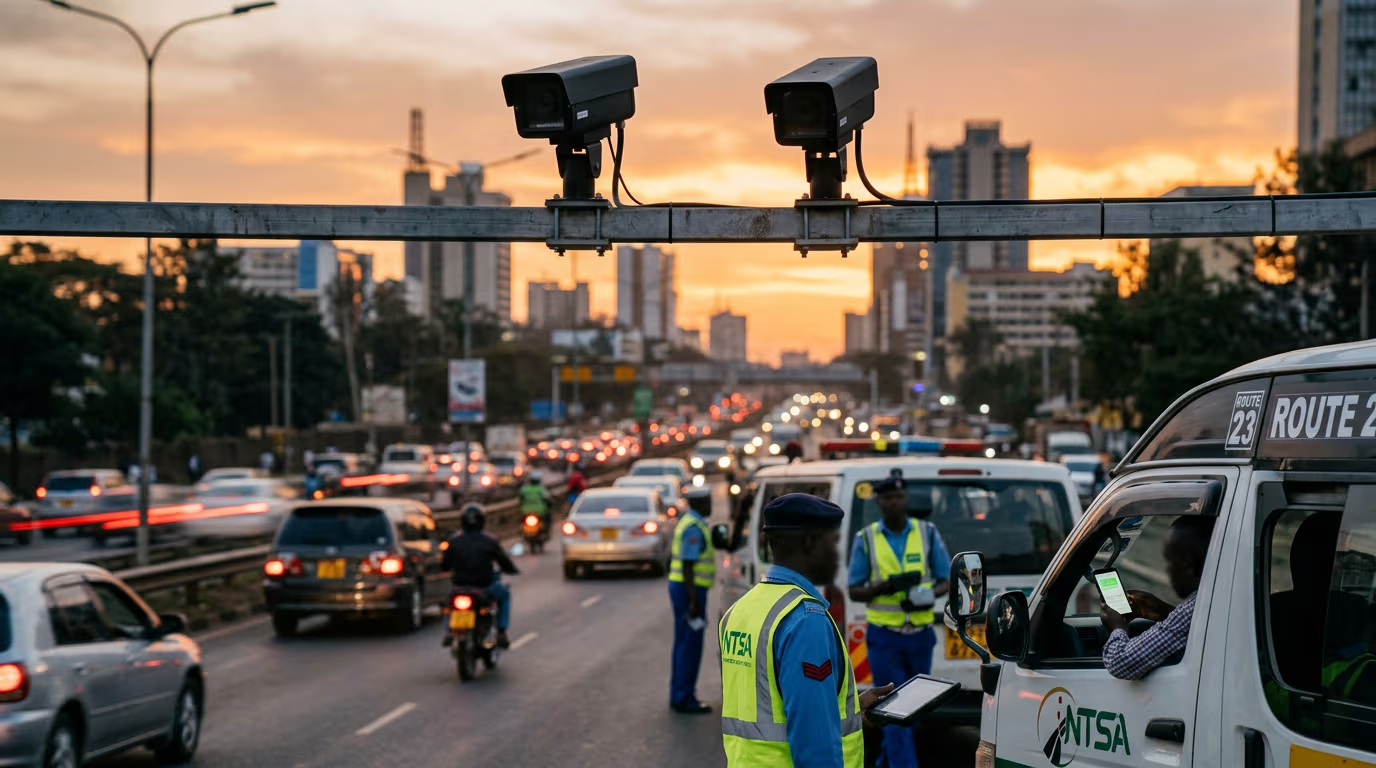
In a recently filed constitutional petition, Kennedy Maingi Mutwiri has moved to court seeking urgent intervention against the National Transport and Safety Authority (NTSA) over its plan to introduce and implement an Instant Traffic Fines Management System.
The case raises weighty constitutional questions about due process, fair administrative action, separation of powers, and the role of courts in traffic enforcement.
For motorists, matatu operators, boda boda riders, and even lawyers watching the evolution of administrative enforcement in Kenya, this case could shape how traffic law is enforced for years to come.
The Petition: What Is Being Challenged?
The case, filed in the Constitutional and Human Rights Division of the High Court in Nairobi, cites multiple provisions of the Constitution including Articles 1, 2, 3, 10, 47, 48, 50, 159, and 258.
At the heart of the petition is the argument that NTSA’s instant fines system may violate constitutional protections.
According to the petitioner, the proposed system would allow NTSA to issue and enforce traffic fines instantly through a digital platform, effectively bypassing the traditional court process that currently governs traffic offences.
The petition names two respondents:
- National Transport and Safety Authority (NTSA)
- The Attorney General
The petitioner argues that the system raises serious legal concerns regarding how justice should be administered in Kenya.
Why the Petitioner Went to Court Urgently
Alongside the petition, the applicant filed a Notice of Motion and a Certificate of Urgency, asking the court to intervene immediately.
The application asks the court to issue conservatory orders to temporarily stop the implementation of the instant traffic fines system until the case is heard and determined.
In simple terms, the petitioner is asking the court to press pause on the new enforcement system.
Why?
Because once implemented, the system could affect thousands of motorists daily, potentially enforcing fines before the legality of the system is fully tested in court.
The Constitutional Questions at the Centre of the Case
This petition raises several powerful constitutional questions that go far beyond traffic tickets.
1. Can Administrative Agencies Replace Courts in Criminal Penalties?
Traffic offences in Kenya are traditionally processed through courts of law. A driver accused of violating traffic laws is charged, given an opportunity to defend themselves, and a magistrate determines guilt and the appropriate penalty.
The petitioner argues that instant fines risk turning administrative agencies into judge, jury, and executioner.
If fines are imposed instantly by a digital system or enforcement officer, the question becomes:
Where does the court come in?
2. The Right to Fair Administrative Action
Article 47 of the Constitution guarantees fair administrative action.
The petition suggests that instant fines could undermine this right if motorists are penalized without adequate notice, hearing, or opportunity to challenge the decision before punishment is imposed.
The issue here is procedural fairness.
Justice must not only be done; it must also be seen to be done.
3. The Right to a Fair Hearing
Article 50 protects the right to a fair hearing.
Under traditional traffic enforcement, drivers can:
- Challenge evidence
- Cross-examine witnesses
- Present their own defense
The petition raises concerns that an automated or administrative fines system may dilute these protections.
4. The Separation of Powers
Another central issue is the constitutional doctrine of separation of powers.
Courts exist to determine guilt and impose penalties. Administrative agencies exist to enforce laws.
The petition asks the court to determine whether NTSA’s proposed system blurs that constitutional line.
If an agency can impose fines instantly, does that effectively shift judicial authority into administrative hands?
Why This Case Matters to Every Kenyan Driver
At first glance, instant fines may sound efficient.
Supporters often argue that they:
- Reduce corruption
- Improve enforcement
- Decongest courts
- Promote road safety
But critics warn of possible risks:
- Abuse of administrative power
- Lack of procedural safeguards
- Automated punishment without judicial oversight
This case could therefore determine how Kenya balances efficiency with constitutional rights.
A Growing Trend in Governance
Kenya is not alone in exploring digital enforcement systems.
Across the world, governments are increasingly adopting:
- Automated traffic cameras
- Instant ticketing systems
- Digital fine payment platforms
But these systems must still fit within constitutional frameworks.
Courts often play a crucial role in defining the limits of administrative power in the digital age.
Case Documents
For readers who wish to examine the filings referenced in this article:
Constitutional Petition
Notice of Motion
Certificate of Urgency
What Happens Next?
The immediate question before the High Court will be whether to grant conservatory orders stopping the rollout of the system while the case proceeds.
If the court finds that the petition raises serious constitutional questions, it may temporarily halt implementation until the matter is fully determined.
If the orders are denied, NTSA could proceed with the rollout while the case continues in court.
Either way, the petition has now opened a critical legal conversation about technology, governance, and constitutional rights in Kenya.
The Bigger Picture
Beyond traffic enforcement, this case touches on a larger philosophical question:
In the quest for efficiency, how far can administrative agencies go without stepping into the constitutional territory of the courts?
It is a question that will continue to confront governments as digital systems increasingly replace traditional processes.
For now, all eyes turn to the High Court.
Because sometimes, even something as simple as a traffic ticket can become a constitutional moment.
What do you think?
Should Kenya adopt instant traffic fines to improve enforcement and reduce corruption, or should all traffic offences remain strictly within the court system?
Join the conversation.












Leave a Reply