


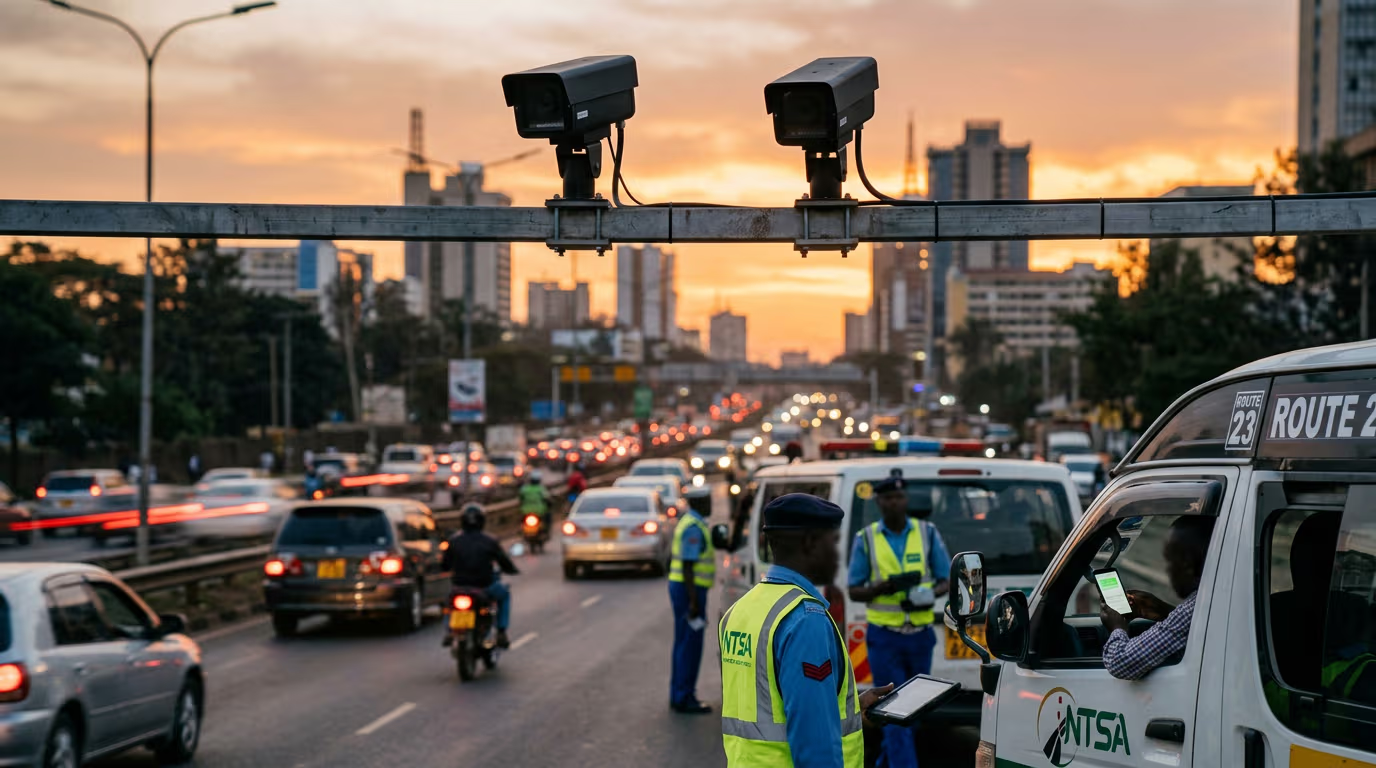
Every day across Kenya’s highways and busy urban roads, motorists, boda boda riders, and matatu operators commit what many consider “small mistakes.”
A forgotten driving license.
A quick phone call while driving.
Stopping a matatu slightly off a designated stage.
For many Kenyans, these feel like harmless everyday habits. But under Kenya’s traffic law, these “minor mistakes” carry real legal consequences and financial penalties.
Behind these penalties lies a little-known but powerful legal framework: the Traffic (Minor Offences) Rules, 2016, a set of regulations designed to streamline the enforcement of everyday traffic violations and keep Kenyan roads safer.
But what exactly do these rules say? And why should every Kenyan road user understand them?
Why Kenya Created the Traffic (Minor Offences) Rules
Before 2016, even relatively small traffic violations often required a full court process. Drivers accused of minor offences would sometimes spend hours or days navigating the judicial system over issues that could have been resolved more quickly.
The Traffic (Minor Offences) Rules, 2016 were introduced to simplify this process.
The rules allow law enforcement officers to issue a police notification of traffic offence, enabling drivers to either admit the offence and pay the statutory penalty or deny the charge and appear before a traffic court.
The intention was clear: reduce court congestion, improve compliance with traffic laws, and encourage responsible driving.
But the rules also quietly created a structured list of offences that can quickly cost road users thousands of shillings.
The “Small” Traffic Mistakes That Carry Real Penalties
The rules list dozens of minor offences drawn from the Traffic Act and related traffic regulations. While they are categorized as “minor,” the financial penalties can still be significant.
Here are some common violations many Kenyans commit without realizing their legal implications:
1. Driving Without a Valid Inspection Certificate
Motorists operating vehicles without a valid inspection certificate risk a fine of Ksh 10,000.
2. Driving Without Proper Number Plates
If identification plates are missing or improperly fixed, the penalty can reach Ksh 10,000.
3. Using a Mobile Phone While Driving
Drivers caught using a phone while a vehicle is in motion face a Ksh 2,000 fine.
4. Failing to Wear a Seat Belt
A driver or passenger who fails to wear a seat belt risks a Ksh 500 penalty.
5. Exceeding Speed Limits
Speeding penalties escalate depending on how much a driver exceeds the limit:
- 1–5 km/h above limit: warning
- 6–10 km/h above limit: Ksh 500
- 11–15 km/h above limit: Ksh 3,000
- 16–20 km/h above limit: Ksh 10,000
For drivers who believe “a few kilometers above the limit” is harmless, the law clearly disagrees.
Boda Boda Riders and Matatus: Frequently Targeted Offences
The rules also focus heavily on public transport and motorcycle operations.
Common penalties include:
- Carrying more than one pillion passenger on a motorcycle – Ksh 1,000.
- Motorcycle rider or passenger without protective gear – Ksh 1,000.
- Matatus picking or dropping passengers outside authorized stages – Ksh 3,000.
- Touting by PSV operators – Ksh 3,000.
These provisions aim to regulate Kenya’s vibrant but often chaotic public transport sector.
What Happens When You Are Issued With a Traffic Offence Notification?
When a police officer issues a notification under these rules, the document typically includes:
- the driver’s personal details
- the alleged offence
- the statutory penalty
- options to admit or deny the charge
If the driver admits the offence, they may pay the stated penalty.
If the driver denies the charge, the matter is referred to a traffic court, where the case is heard and determined by a magistrate.
This system ensures that even minor offences still preserve the accused person’s constitutional right to challenge the charge in court.
The Bigger Picture: Road Safety and Legal Accountability
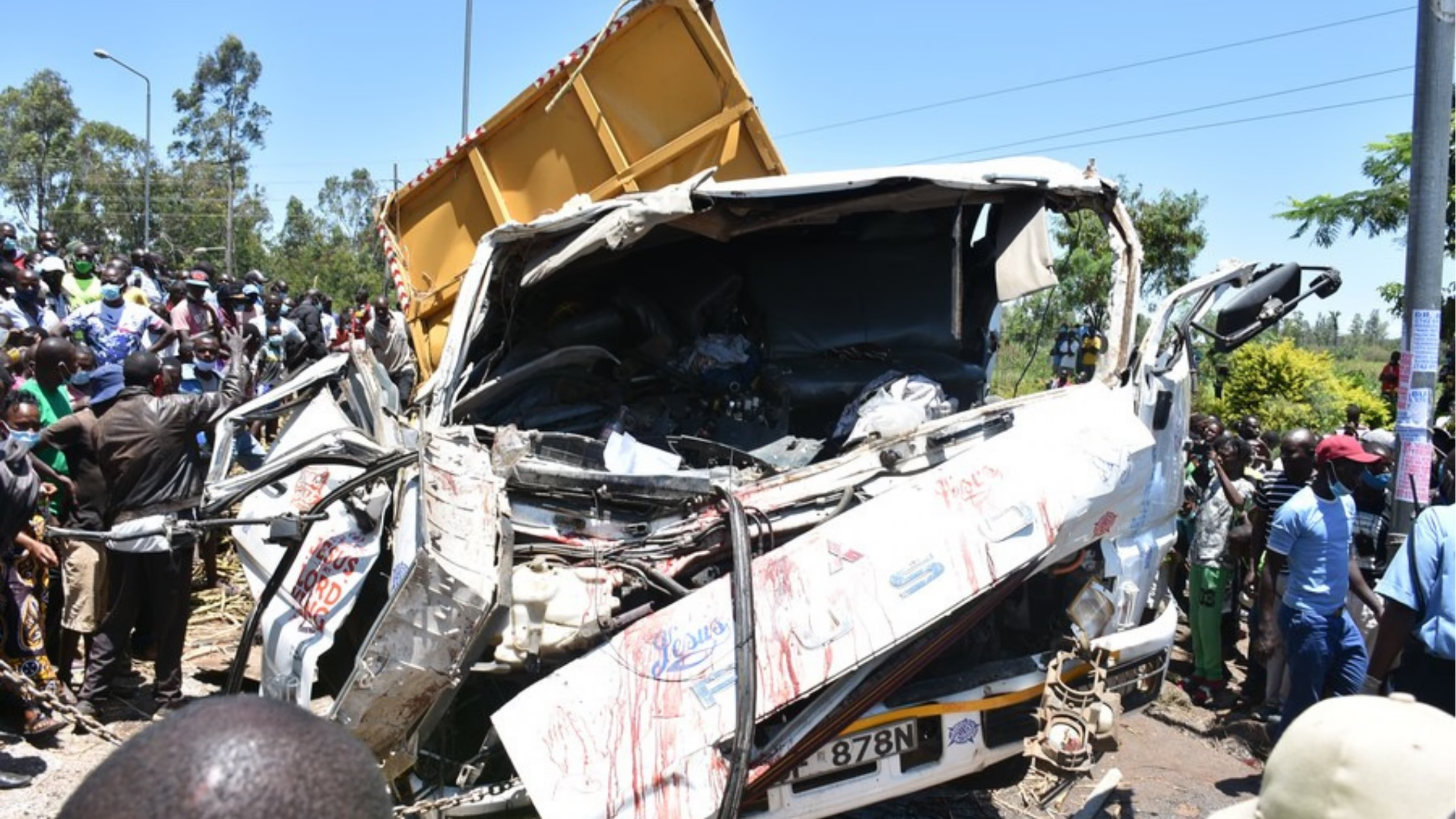
Kenya continues to grapple with high numbers of road accidents and traffic fatalities.
While the Traffic (Minor Offences) Rules may appear administrative on the surface, they play a crucial role in shaping driver behavior.
By attaching clear financial penalties to everyday traffic violations, the law sends a simple but powerful message:
Small decisions on the road can have serious consequences.
A moment of impatience, negligence, or convenience may cost not just money, but lives.
What Every Kenyan Road User Should Remember
The Traffic (Minor Offences) Rules are not simply about fines.
They are about discipline on the road.
They remind drivers, boda boda riders, matatu operators, and pedestrians that the law governs even the smallest actions behind the wheel.
And in a country where roads are shared by millions every day, those small actions can make the difference between order and chaos.
Final Thought
Traffic laws often appear mundane until the moment they affect us personally.
But understanding them is one of the simplest ways to protect yourself, legally and physically, on Kenya’s roads.
Because sometimes the offences we consider “minor” are exactly the ones that cost us the most.














Leave a Reply