


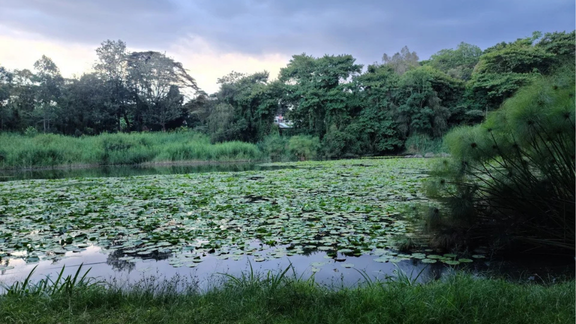
How the Environment and Land Court Reinforced the Right to a Clean and Healthy Environment in Kenya
In a decision that will shape the future of environmental governance in Kenya, the Environment and Land Court has quashed licences issued for the development of a golf range and restaurant inside Ngong Road Forest.
In ELC Petition No. E003 of 2025, the court held that the issuance of a Special Use License and an Environmental Impact Assessment (EIA) License to Karura Golf Range Limited violated the Constitution and environmental laws.
At the heart of the case was a fundamental question:
Can commercial development take root in a gazetted forest without meaningful public participation and strict compliance with environmental safeguards?
The court’s answer was clear — No.
The Parties and the Project
The petition was filed by the Law Society of Kenya (LSK) against several state agencies and the private developer.
The proposed project involved:
- A golf driving range
- A restaurant
- A mini golf park
within the Miotoni Block of Ngong Road Forest, a gazetted Central Government Forest reserve in Nairobi.
Licenses had been issued by:
- National Environment Management Authority (NEMA) – through an EIA License
- Kenya Forest Service (KFS) – through a Special Use Licence
The Kenya Pipeline Corporation was also involved because part of the proposed site lay along a pipeline wayleave.
Why Ngong Road Forest Matters
Ngong Road Forest is not just “idle land.”
Established in 1932, it once covered over 2,000 hectares but has since reduced to approximately 1,224 hectares. It consists of both indigenous and plantation forest.
It serves as:
- A biodiversity sanctuary
- A carbon sink
- A recreational green space for Nairobi residents
- A public trust resource under Article 62 of the Constitution
This case was therefore not just about a golf range, it was about the future of public forests in Kenya.
The Core Legal Issues
The court distilled the dispute into four major questions:
- Did the issuance of the licenses violate Articles 42, 47, and 35 of the Constitution?
- Was there meaningful public participation under Article 10?
- Did a commercial golf range qualify for a Special Use License under the Forest Conservation and Management Act?
- Was suspension of the licenses sufficient, or did they need to be quashed?
Let’s unpack what the court found.
1. The Right to a Clean and Healthy Environment (Article 42)
Article 42 guarantees every person the right to a clean and healthy environment.
The court emphasized that this right is intertwined with:
- Article 69 (State’s duty to protect the environment)
- Article 70 (enforcement of environmental rights)
The judge reaffirmed the precautionary principle, where there is scientific uncertainty, regulators must err on the side of environmental protection.
NEMA itself admitted that further ecological and risk assessments were necessary after issuing the license. That contradiction became fatal.
The court held that an EIA license cannot be issued first and justified later.
2. Public Participation: Not a Checkbox Exercise
One of the most significant findings was the failure of meaningful public participation.
Although the developer claimed stakeholder engagement, the court found:
- No clear evidence of public meetings
- No dates of consultations
- No proof of questionnaires or public notices
- Limited engagement only with a forest association management committee
Worse still, initial presentations referenced only a golf range, not the restaurant and mini golf park that were later licensed.
The court relied on the Supreme Court’s reasoning in
British American Tobacco Kenya PLC v Cabinet Secretary for the Ministry of Health & 2 others
which held that public participation must be:
- Clear
- Transparent
- Inclusive
- Structured
- Meaningful
It is a constitutional obligation, not public relations.
The court concluded that Articles 10 and 42 had been violated.
3. Did the Project Qualify for a Special Use License?
Under the Forest Conservation and Management Act, a Special Use License is defined as authorization for activities whose primary purpose yields public benefit in:
- Transportation
- Communication
- Energy
- Research
- Education
A commercial golf range and restaurant did not fall within these categories.
The court found that KFS failed to demonstrate how the license advanced sustainable forest management.
Even the justification that the project would generate revenue was dismissed as insufficient without evidence showing how that revenue served conservation purposes.
The Special Use License was declared ultra vires and unconstitutional.
4. Suspension vs Revocation: Why the Court Stepped In
After public uproar, the licenses were suspended.
But the court noted:
- Suspension letters gave no clear compliance timelines.
- NEMA admitted further assessments were needed.
- The Cabinet Secretary had issued social media directives.
The judge described this as regulatory uncertainty.
If a license is fundamentally unlawful, suspension cannot cure illegality.
The court therefore issued:
- Orders of certiorari quashing both licenses
- Orders of prohibition preventing reinstatement
- Declarations that the licenses were null and void ab initio
What This Judgment Means for Environmental Law in Kenya
This ruling reinforces several critical principles:
1. Environmental Rights Are Enforceable
The court affirmed that Article 42 is not symbolic, it carries real consequences.
2. Public Forests Are Public Trust Assets
State agencies cannot treat gazetted forests as flexible commercial zones without strict constitutional compliance.
3. The Precautionary Principle Has Teeth
Regulators must ensure complete assessments before issuing licenses, not after controversy erupts.
4. Public Participation Must Be Documented
Courts will demand tangible evidence, not general statements.
Why This Case Matters Beyond Ngong Road Forest
This decision sends a message to:
- Developers eyeing protected land
- Regulatory bodies tempted to shortcut procedures
- Citizens questioning environmental approvals
Kenya’s Constitution demands accountability.
The Environment and Land Court made it clear:
Environmental governance must be transparent, participatory, and lawful, or it will not stand.
Final Reflection: A Forest Saved, For Now
Ngong Road Forest remains intact.
But this case is not just about trees.
It is about constitutional supremacy.
It is about intergenerational justice.
It is about whether economic ambition can override ecological responsibility.
For lawyers, this is a landmark affirmation of environmental constitutionalism.
For ordinary citizens, it is proof that public interest litigation works.
And for regulators, it is a reminder:
When it comes to public forests, the Constitution is not optional.
Legal Express Kenya will continue tracking developments in environmental jurisprudence and public interest litigation shaping the future of Kenya’s natural heritage.
















Leave a Reply