


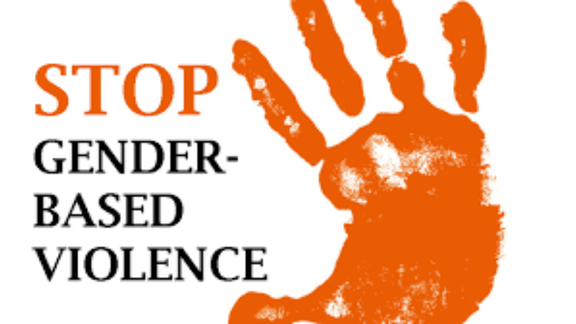
In November 2025, a sobering document was placed before the President of the Republic of Kenya. Titled the Report of the Technical Working Group on Gender-Based Violence (GBV) Including Femicide, it was chaired by former Deputy Chief Justice Dr. Nancy Baraza and presented to President William Samoei Ruto.
But this is not just another government report.
It is a mirror.
A mirror reflecting the grief of mothers who buried daughters.
A mirror reflecting survivors turned away at police stations.
A mirror reflecting a country with a progressive Constitution, yet struggling to protect the lives it promises to defend.
At Legal Express Kenya, we break down what this report means, why it matters, and what must happen next.
Why Was the Technical Working Group Formed?
In January 2025, following an alarming rise in killings of women and girls, the President established a Technical Working Group (TWG) through Gazette Notice No. 109 of 10th January 2025.
The move followed:
- Escalating cases of femicide
- Public outrage across counties
- Social media campaigns demanding accountability
- Persistent failures in investigation and prosecution
The Constitution guarantees:
- Article 26 – Right to Life
- Article 27 – Equality and Freedom from Discrimination
- Article 28 – Human Dignity
- Article 29 – Freedom and Security of the Person
- Article 48 – Access to Justice
Yet, the report admits what many Kenyans already know:
There is a painful gap between the law on paper and justice in practice.
What Is Femicide, And Why Is It Legally Invisible?
The report defines femicide as:
The intentional killing of women or girls because of their gender.
In Kenya, however, femicide is not a stand-alone offence. It is prosecuted as murder under the Penal Code.
This has serious consequences:
- No clear legal elements specific to gender-motivated killing
- No proper disaggregated national data
- Inconsistent investigation standards
- Limited policy focus
The TWG recommends amending the Penal Code to formally define and codify femicide as a distinct offence.
Why This Matters
Globally, countries like South Africa and parts of Latin America have begun recognizing femicide distinctly to address systemic gender-based killing.
At the African level, the newly adopted African Union Convention on Ending Violence Against Women and Girls (2025) recognizes femicide as a distinct crime, a milestone for the continent.
Kenya now stands at a legal crossroads.
What the Data Reveals: A National Crisis
The report highlights:
- 34% of Kenyan women have experienced physical violence since age 15 (KDHS 2022)
- Women aged 30–44 are the most affected
- Counties like Nairobi, Meru, and Nakuru record high prevalence
- Rising cases of Technology-Facilitated Gender-Based Violence (TFGBV)
This includes:
- Cyberstalking
- Online harassment
- Non-consensual sharing of intimate images
- Deepfake exploitation
- Digital surveillance
Violence has evolved.
The law is struggling to keep up.
Families, Culture, and the Obstruction of Justice
One of the most painful findings in the report is this:
Families often obstruct justice.
Cases are:
- Settled through clan negotiations
- Resolved through compensation
- Silenced to “protect family honour”
- Withdrawn after coercion
The TWG recommends criminalising interference in GBV cases, including clan-led settlements in criminal matters like femicide.
This recommendation challenges deeply rooted cultural practices.
It forces us to ask uncomfortable questions:
When does reconciliation become complicity?
When does silence become participation in injustice?
The Role of Social Media: Advocate and Accomplice
Social media has been both:
- A tool for awareness (#StopFemicideKE, #MyDressMyChoice)
- A space for victim-blaming and misinformation
Graphic images circulate without consent.
Survivors are shamed.
Families are retraumatised.
The report calls for:
- A GBV Digital Ethics Code
- Stronger platform accountability
- Trauma-informed journalism training
- Real-time reporting systems linked to helplines
In a digital Kenya, justice must also be digital.
Chronic Underfunding and Fragmented Systems
The report exposes another harsh truth:
Kenya’s GBV response system is severely underfunded.
Problems include:
- Donor dependency
- Limited county budgets
- Manual data systems
- No centralized national database
- Fragmented coordination between police, health facilities, ODPP, and Judiciary
The TWG recommends:
- A National GBV and Femicide Response Fund
- A Gender-Based Violence Management Information System
- A National GBV and Femicide Observatory
- Mandatory budget lines at national and county levels
Without money, training, and systems, even the best laws fail.
Learning from Past Legal Developments in Kenya
Kenya has made progress before:
- The Sexual Offences Act (2006) strengthened prosecution of sexual crimes
- The Protection Against Domestic Violence Act (2015) introduced protective mechanisms
- The Prohibition of FGM Act criminalised harmful cultural practices
Each law came after public pressure and national reflection.
But as courts have repeatedly emphasized in constitutional jurisprudence:
Rights must be practical and effective, not theoretical or illusory.
The TWG report echoes that same judicial philosophy.
The Boldest Recommendation: Declare GBV a National Crisis
Perhaps the most powerful recommendation is this:
That the President declare Gender-Based Violence, including femicide, a national crisis.
Such a declaration would:
- Elevate GBV to emergency priority
- Unlock funding
- Accelerate reforms
- Mobilize state machinery
- Signal political seriousness
It would move the conversation from sympathy to structural transformation.
What Happens Next?
The report includes an implementation matrix assigning responsibilities and timelines.
But history teaches us that:
Reports can gather dust.
Or they can change nations.
The difference lies in:
- Political will
- Public vigilance
- Media accountability
- Civil society pressure
- Judicial courage
A Legal and Moral Reckoning
This report is not merely a policy document.
It is a national confession.
It admits:
- Weak enforcement
- Legal gaps
- Cultural resistance
- Institutional failure
But it also offers:
- Clear reforms
- Structural solutions
- Survivor-centred approaches
- A roadmap to accountability
Kenya’s Constitution begins with “We, the people.”
Ending femicide and gender-based violence cannot be left to task forces alone.
It requires a societal shift.
At Legal Express Kenya, we will continue to track:
- Legislative amendments
- Budget allocations
- Court rulings
- Implementation milestones
Because justice is not just about laws passed.
It is about lives protected.
If you or someone you know is experiencing GBV, report to the nearest police station or seek help through available national helplines.
Justice must begin somewhere.







Leave a Reply