



There are moments when the law confronts society with uncomfortable truths. Moments when the courtroom becomes more than a place of procedure, it becomes a mirror. The arraignment of eight Kenya Defense Forces (KDF) soldiers at the Mombasa Law Courts is one such moment.
The charges are grave: trafficking methamphetamine valued at over Ksh 192 million. But beyond the figures and charge sheets lies a deeper national reckoning, about trust, power, accountability, and the fragile line between authority and abuse.
A Courtroom Heavy With Silence
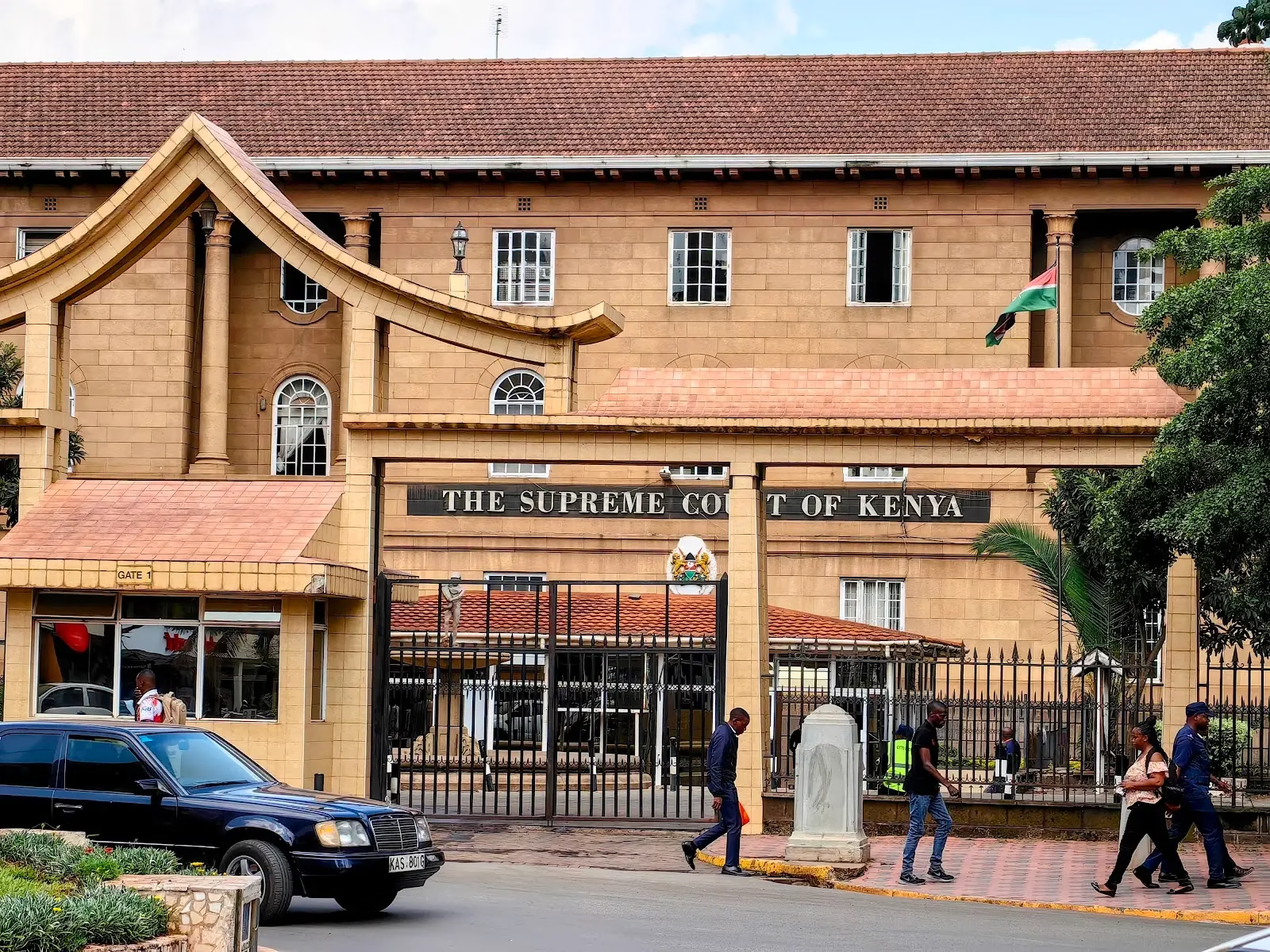
When the eight accused soldiers stood before Senior Principal Magistrate Gladys Olimo, they were no longer shielded by rank or uniform. They were defendants, answering to the same law that governs every Kenyan.
Each pleaded not guilty.
Their names, Duke Nyamwaya Nyarige, Juma Mwinyifaki Juma, Michael Peter Kariuki, Elijah Mbogo, James Ekiru, Abdulrehman Salad Jara, Abdirahman Abdi Kuno, and Peter Kipng’etich Tonui, are now etched into a case that has sent ripples through both legal and security circles.
The prosecution alleges that the accused were found in possession of, or conspired to traffic, varying quantities of methamphetamine. Some face individual counts. Others face joint charges. Several counts allege that the drugs were stored in residential premises, an assertion that paints a troubling picture of planning, concealment, and scale.
This is not a case of small quantities or casual involvement. The charges suggest organisation, coordination, and significant financial value.
Why This Case Has Captured the Nation
Kenya has prosecuted drug traffickers before. Coastal courts are no strangers to narcotics cases. But this one is different.
It is different because of who is accused.
The Kenya Defence Forces occupy a unique place in the national psyche. They are entrusted with defending sovereignty, maintaining discipline, and upholding national security. Allegations that members of this institution may have been involved in the drug trade cut deeply into public confidence.
This case forces difficult questions into the open:
- What happens when those tasked with protecting the nation are accused of undermining it?
- How does the justice system respond when power, access, and influence are part of the equation?
- Can the law remain firm, fair, and fearless?
The State Draws a Hard Line
Perhaps the clearest signal of the seriousness of this case came not from the charges themselves, but from the Director of Public Prosecutions’ opposition to bond.
In court, the prosecution argued that the proposed bond terms did not reflect the gravity of the alleged offences. More importantly, the State expressed concern that releasing the accused could pose real risks, including interference with witnesses and compromise of ongoing investigations.
This position highlights a critical tension in Kenya’s criminal justice system:
the constitutional right to bail versus the obligation to protect the integrity of the judicial process.
Bond is not meant to be punitive. But neither is it automatic. Where allegations involve large-scale organised crime and individuals who may have held positions of authority, the court must tread carefully.
The magistrate’s pending ruling on bond will therefore be closely watched, not just by lawyers, but by a public hungry for reassurance that justice applies equally to all.
Presumption of Innocence, and Public Interest
It must be said clearly: the accused are presumed innocent until proven guilty. That principle is non-negotiable.
Yet presumption of innocence does not exist in a vacuum. Courts must weigh individual rights against broader public interest. In cases involving narcotics, the harm is not abstract. Drug trafficking devastates families, fuels crime, corrodes institutions, and destroys lives quietly and relentlessly.
That is why this case matters beyond the dock.
Beyond the Headlines: The Human Cost
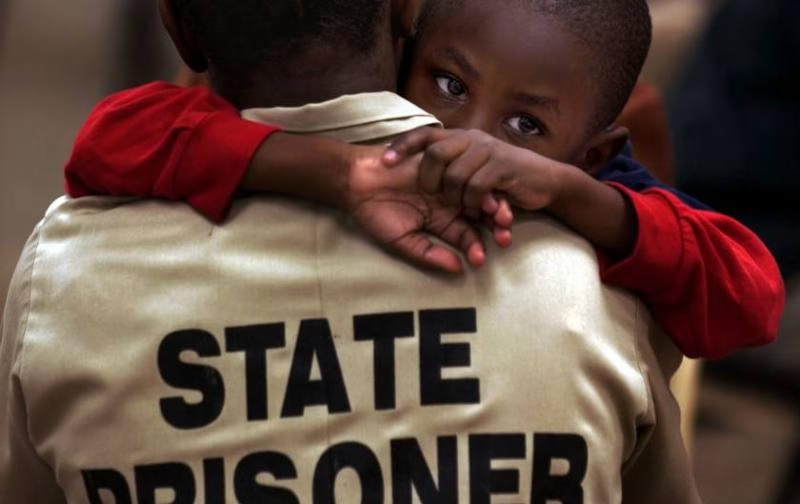
Behind every accused person is a family, parents, partners, children, watching their lives unravel under the weight of allegations. Careers built over years now hang in the balance. Reputations, whether ultimately vindicated or not, may never fully recover.
At the same time, behind every drug trafficking case are untold victims: communities hollowed out by addiction, young people lured into cycles of dependency, and institutions strained by corruption.
Justice, in such moments, must be careful, but it must also be courageous.
What Comes Next
The court is expected to rule on the bond application imminently. Thereafter, the trial process will begin to test the prosecution’s evidence and the defence’s responses.
As this unfolds, one thing is certain: this case will shape conversations about accountability within disciplined forces, prosecutorial resolve, and the role of courts in confronting organised crime.
Why Legal Express Kenya Is Watching Closely
At Legal Express Kenya, we believe the law is not just about statutes and judgments, it is about people, power, and principle. This case sits at the intersection of all three.
We will continue to follow it closely, explain its legal implications in clear language, and ask the hard questions that matter to the public.
Because when the uniform meets the dock, the entire nation deserves transparency, fairness, and truth.















Leave a Reply