


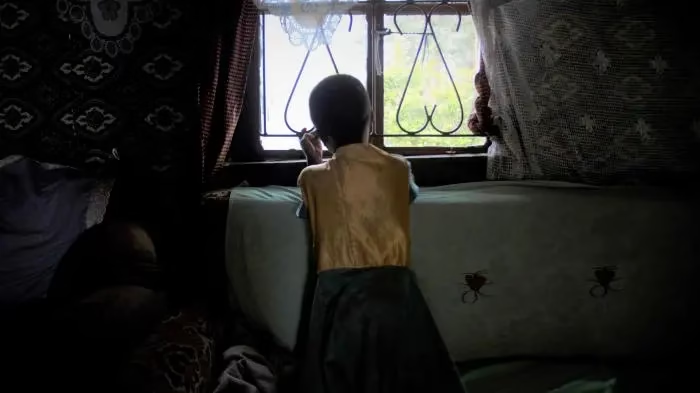
At eight years old, a child should be worried about school bells, friendships, and play. Not survival. Not fear. Not carrying trauma that will follow her into adulthood.
Yet that is the reality at the centre of a disturbing sexual assault case from Kajiado, where a man convicted of sexually abusing an 8-year-old girl was sentenced to ten years’ imprisonment — a sentence the Director of Public Prosecutions (DPP) now says is not enough.
This is not a dispute about guilt. The conviction stands firm. What is being questioned is something deeper and more uncomfortable: Does the punishment truly reflect the gravity of the harm done to a child?
The Crime the Court Found Proven
According to the evidence accepted by the court, the offence was not accidental, impulsive, or ambiguous.
The accused deliberately lured the child from her home under false pretences. He isolated her. He threatened her. And he sexually assaulted her.
This was a crime committed against a vulnerable child, involving deception, intimidation, and exploitation — elements that, under Kenyan law, aggravate rather than mitigate culpability.
Five prosecution witnesses testified. Their evidence was found to be credible, consistent, and sufficient to prove the case beyond reasonable doubt. The trial court had no difficulty in entering a conviction.
Justice, it seemed, had taken its first step.
The Sentence That Sparked Unease
The trial court sentenced the offender to ten years in prison.
For many Kenyans, that number immediately raised questions. For the Office of the Director of Public Prosecutions, it raised a red flag.
The DPP has formally expressed dissatisfaction with the sentence, stating that it fails to adequately reflect the seriousness of the offence and does not sufficiently meet the core purposes of criminal punishment, particularly:
- Deterrence
- Protection of children
- Proportional punishment for grave sexual violence
In plain terms, the concern is this:
If a child can be lured, threatened, violated, and left with lifelong trauma — and the consequence is ten years — what message does that send?
Why Sentencing Matters as Much as Conviction
In sexual offences involving children, sentencing is not a technical afterthought. It is the loudest statement the justice system makes to victims, offenders, and society at large.
A sentence must do more than punish the offender. It must:
- Acknowledge the depth of harm suffered by the child
- Affirm the state’s duty to protect minors
- Deter others who may contemplate similar crimes
- Reassure the public that the justice system understands the seriousness of sexual violence against children
When a sentence appears lenient in the face of extreme vulnerability and abuse, it risks undermining public confidence and retraumatizing victims who already feel unheard.
The DPP’s Constitutional Role
The decision to appeal is not emotional grandstanding. It is grounded in law.
Under Article 157 of the Constitution of Kenya, the DPP has the authority and responsibility to appeal sentences that do not align with justice, public interest, or the objectives of criminal law.
In this case, the DPP is clear:
- The conviction is sound
- The evidence was strong
- The sentence, however, is manifestly inadequate
Appealing a sentence is not an attack on judicial independence. It is part of a functioning legal system where checks, balances, and review exist to ensure fairness — especially where vulnerable victims are concerned.
Beyond the Courtroom: The Reality for Child Victims
A prison term ends. Trauma often does not.
For a child survivor of sexual assault, the impact can include:
- Long-term psychological distress
- Disrupted education
- Trust issues
- Social stigma
- A lifetime of emotional healing
The law cannot undo the harm. But it can acknowledge it — or diminish it.
That is why sentencing in child sexual assault cases carries symbolic weight. It tells survivors whether the system truly sees what was taken from them.
Kajiado and the Broader Crisis of Child Protection
This case does not exist in isolation. Kajiado County, like many parts of Kenya, continues to grapple with serious child protection challenges — including sexual violence, neglect, and exploitation.
Each case that reaches the courts is a reminder that prevention has failed somewhere along the line. The justice system then becomes the last line of defence — and its response must be firm, clear, and uncompromising.
What the Appeal Could Mean
If successful, the DPP’s appeal could result in:
- A harsher sentence that better reflects the gravity of the offence
- Clear judicial guidance on sentencing standards in child sexual assault cases
- A stronger deterrent message nationally
- Renewed confidence among victims that the law stands with them
More importantly, it would affirm a simple but powerful principle:
Crimes against children demand the highest level of seriousness from the justice system.
Justice Is Not Just Legal — It Is Moral
This case forces an uncomfortable but necessary reflection.
What does justice look like when the victim is eight years old?
How do we measure punishment against stolen childhood?
And when the law speaks, does it speak loudly enough for those who were silenced?
As the appeal unfolds, Legal Express Kenya will continue to follow the case — not just for its legal implications, but for what it says about who we are as a society and how fiercely we protect our children.
Because justice for children cannot afford to whisper.

















Leave a Reply