


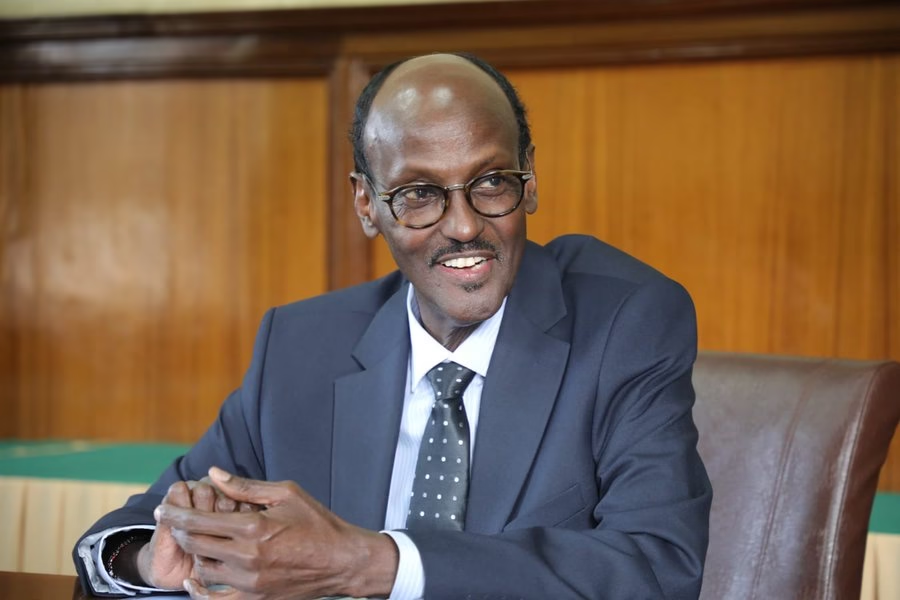
Kenya’s judiciary has, over the decades, been shaped by men and women whose lives were defined not by titles, but by courage, sacrifice, and an unshakable belief in justice. Justice Mohammed Khadhar Ibrahim was one such jurist. His story is not merely one of professional success; it is a story of resilience, principled defiance, and lifelong service to the rule of law.
As the nation reflects on his passing, Legal Express Kenya honours a man whose journey through the justice system mirrored Kenya’s own struggle for constitutionalism, equality, and democratic maturity.
Early Life and the Making of a Lawyer
Born on 1 January 1956, Justice Mohammed Khadhar Ibrahim grew up in modest circumstances that deeply influenced his worldview. From an early age, he was exposed to the realities of marginalisation and inequality, experiences that would later shape his approach to law and justice.
His pursuit of legal education led him to the University of Nairobi, where he studied law and graduated at a time when Kenya’s legal and political landscape was fraught with tension. On 11 January 1983, he was admitted as an Advocate of the High Court of Kenya, becoming the first Kenyan‑Somali lawyer to be admitted to the Bar. This milestone was not only personal; it was symbolic for a community long excluded from the country’s professional and civic spaces.
Legal Practice and the Price of Principle
Justice Ibrahim began his legal career at Waruhiu & Muite Advocates, where he steadily rose to become a partner. His years in private practice were marked by a growing reputation for integrity, fearlessness, and a willingness to represent unpopular causes.
He was particularly vocal against discriminatory state practices, including policies that targeted Kenyan citizens of Somali descent. At a time when speaking out came with real consequences, he chose principle over personal safety.
That courage came at a high cost. In July 1990, during Kenya’s struggle for multiparty democracy, Mohammed Ibrahim was detained without trial and held in solitary confinement at Kamiti Prison for nearly a month. His detention was not for committing any crime, but for providing legal support and advice to pro‑democracy activists.
For many, such an experience would have been silencing. For him, it became formative. Those close to him would later observe that his belief in constitutional safeguards and judicial independence was strengthened, not shaken, by that period of incarceration.
Transition to the Bench
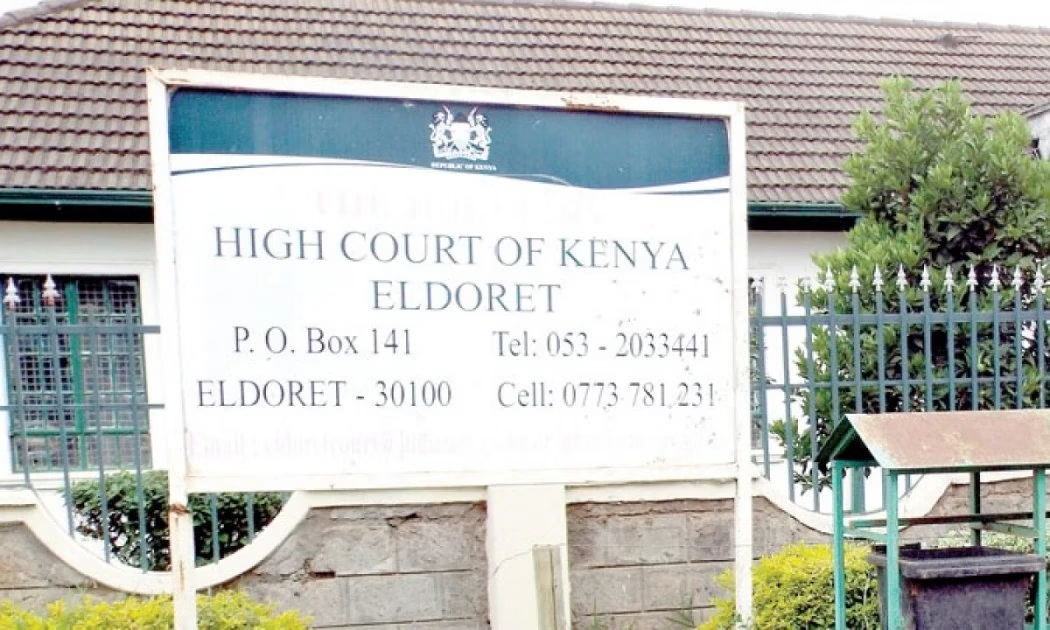
In May 2003, Mohammed Ibrahim was appointed a Judge of the High Court of Kenya, marking the beginning of a new chapter in public service. He served in multiple stations and divisions, including Civil, Commercial, and Constitutional Law, and later as Resident Judge in Eldoret and Mombasa.
His judgments during this period reflected a deep respect for due process, human rights, and access to justice. He was known among advocates for his calm courtroom demeanour, careful reasoning, and sensitivity to the human impact of legal decisions.
At the Apex: The Supreme Court of Kenya
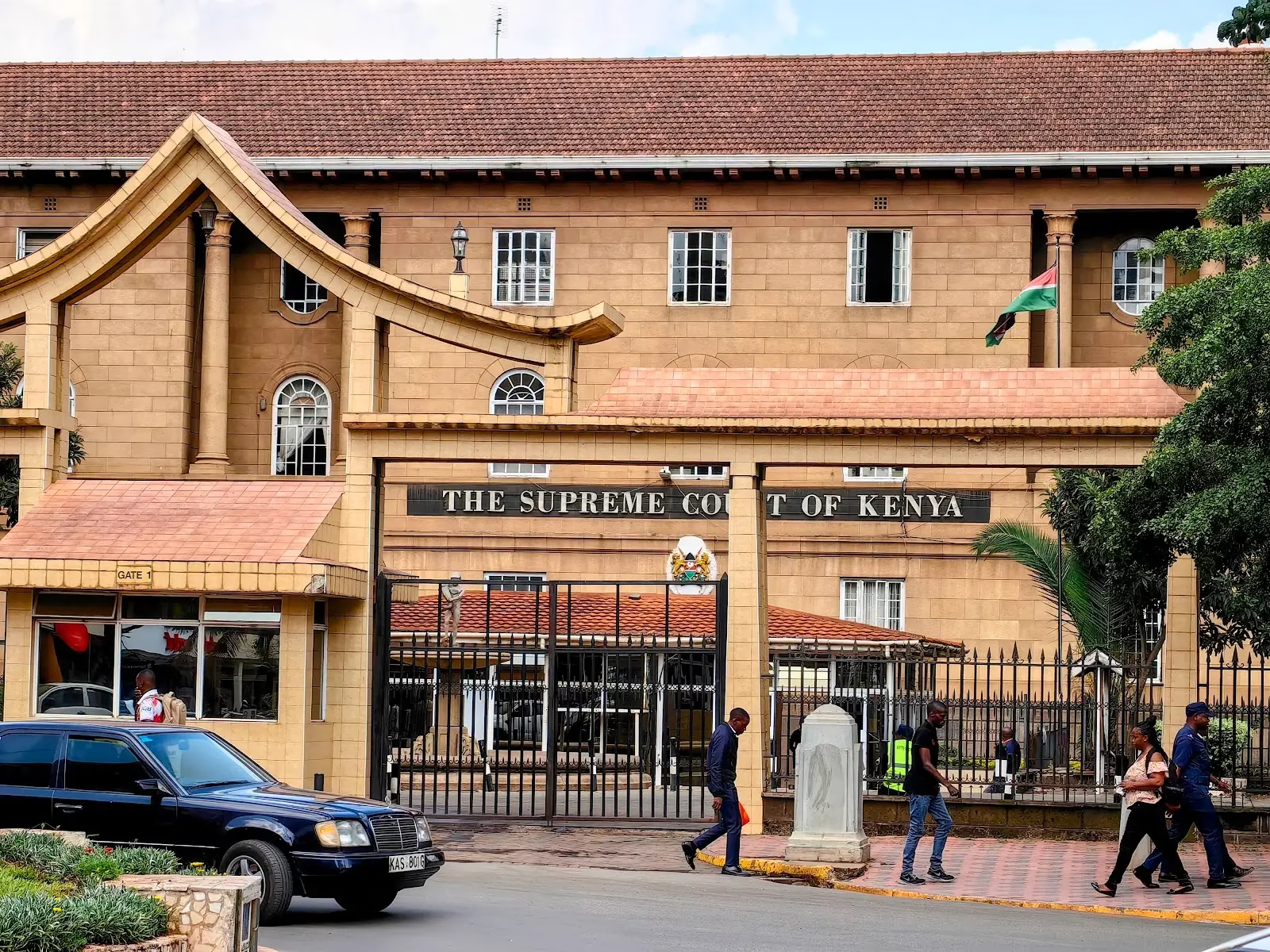
Justice Ibrahim’s most defining professional chapter began on 16 June 2011, when he was appointed to the inaugural Supreme Court of Kenya. This was a historic moment — the first Supreme Court under the 2010 Constitution, tasked with interpreting and safeguarding a transformative legal charter.
As a Supreme Court Justice, he was at the centre of decisions that shaped Kenya’s constitutional democracy. Among the most consequential were the presidential election petitions that tested the credibility of electoral processes and the independence of the Judiciary.
He sat in the 2013 Presidential Election Petition, the first of its kind under the new constitutional order, a case that set foundational jurisprudence on electoral disputes. Nearly a decade later, he again served in the 2022 Presidential Election Petition, a highly contested matter watched closely both locally and internationally.
Beyond the courtroom, Justice Ibrahim played a key role in strengthening judicial institutions. In 2021, he was appointed Chairperson of the Judiciary Committee on Elections, overseeing preparations for election‑related dispute resolution. In 2022, he was elected by his peers to represent the Supreme Court at the Judicial Service Commission, further cementing his influence on judicial governance and reform.
Commitment Beyond Judgments
Justice Mohammed Ibrahim’s contribution to justice extended far beyond formal judicial roles. He was actively involved in legal aid and human rights organisations, including Kituo Cha Sheria and the Legal Education and Aid Programme. He was also a founding trustee of Mwangaza Trust, reflecting a lifelong commitment to social justice and community empowerment.
He mentored young lawyers, spoke candidly about ethical practice, and consistently emphasised that the law must serve people — especially the vulnerable — rather than power.
Legacy and Reflection
Justice Mohammed Khadhar Ibrahim was due to retire on 1 January 2026, concluding more than four decades of service to the legal profession and the Kenyan state. However, on 17 December 2025, after a long illness, he passed away at the age of 69.
His legacy is woven into Kenya’s constitutional history — from the fight against discrimination, through the dark days of political repression, to the shaping of jurisprudence at the country’s highest court.
At Legal Express Kenya, we remember Justice Ibrahim not only as a Supreme Court Judge, but as a symbol of what the law can be when guided by courage, empathy, and unwavering integrity. His life reminds us that justice is not merely written in statutes or judgments; it is lived, defended, and sometimes paid for dearly.
Kenya’s legal community is richer for his service — and poorer for his loss.
Legal Express Kenya celebrates the life and legacy of Justice Mohammed Khadhar Ibrahim — a jurist who stood firm when it mattered most, and whose work will continue to influence Kenyan law for generations to come.










Leave a Reply