


The Law on Fighting Corruption in Kenya
Kenya has set out strong laws to deal with corruption. The Anti-Corruption and Economic Crimes Act, 2003 and the Ethics and Anti-Corruption Commission Act, 2011 give the Ethics and Anti-Corruption Commission the power to investigate, trace and recover property suspected to be bought with stolen public funds.
The law allows the Commission to go to court and ask for property to be frozen or taken back by the State. This process is civil in nature. It does not require the Commission to prove criminal guilt beyond reasonable doubt but only to show that the property was acquired in a way that cannot be explained lawfully.
The Case of Okoth Obado
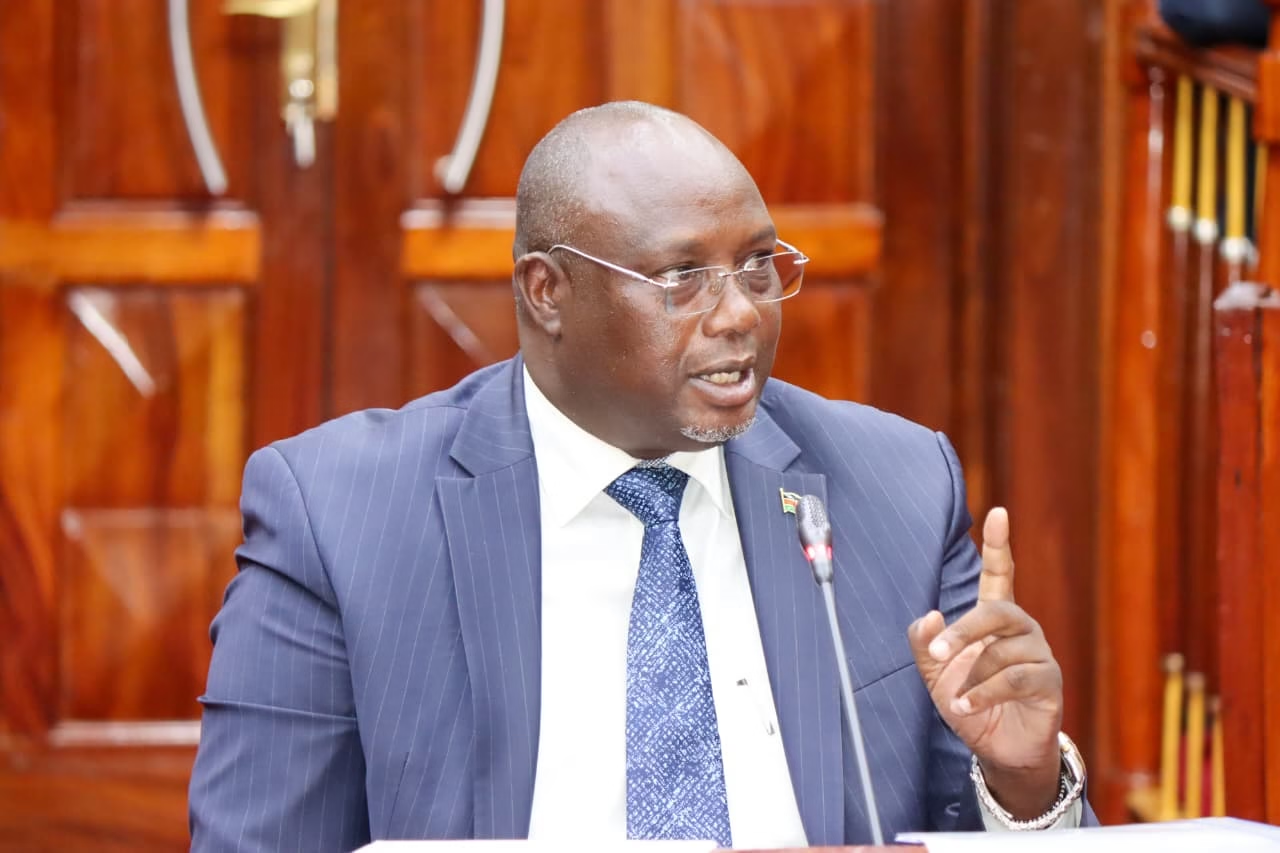
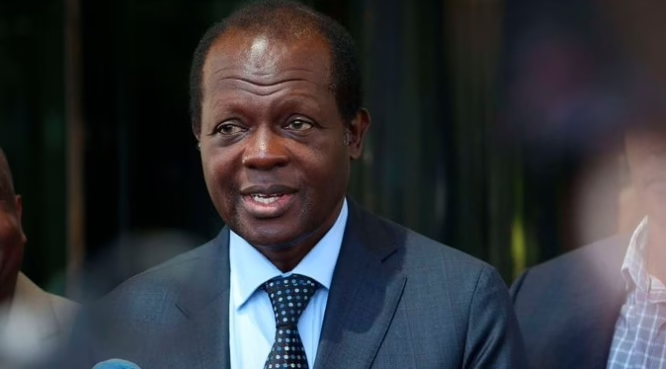
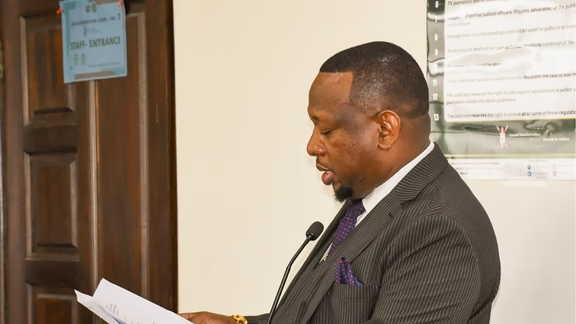
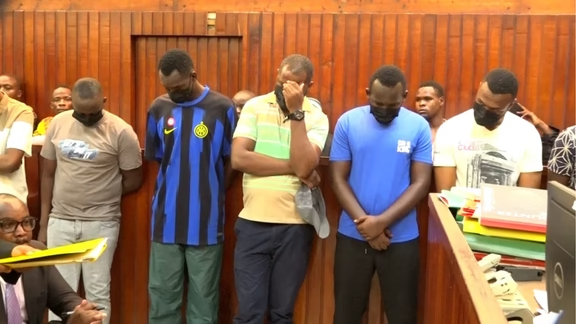
Former Migori Governor Okoth Obado has been linked by the Commission to several assets suspected to come from graft. Some of these properties have been listed for auction. The public notices have been placed to give the public a chance to view and bid for the properties under the watch of licensed auctioneers.
Court Rulings on Asset Recovery
Kenyan courts have supported the use of asset recovery as a tool to fight corruption. In Ethics and Anti-Corruption Commission v. James Njenga Karume (2016) the High Court stated that unexplained wealth can be taken back by the State where the owner cannot show a lawful source.
In EACC v. Stanley Mombo Amuti (2019) the Court of Appeal upheld the forfeiture of millions of shillings after the official failed to explain the source of his funds. These rulings confirm that public officers must account for their property. Where they fail, the law gives power for such property to be taken back.
Why Taking Back Stolen Money Is Important
The auctions linked to Okoth Obado raise important issues for Kenya. First, they show that the fight against corruption is not only about criminal trials but also about recovering wealth for the public. Second, they test whether selling such properties can deter others from abusing public office. Third, they raise the question of whether recovered wealth will be used transparently to benefit citizens, especially in counties like Migori that face economic challenges.
In conclusion, the auction of assets connected to Okoth Obado is a turning point in how Kenya handles corruption. The success of this approach will depend on fair enforcement and honest use of the recovered wealth for the good of all Kenyans.







Leave a Reply