


Background
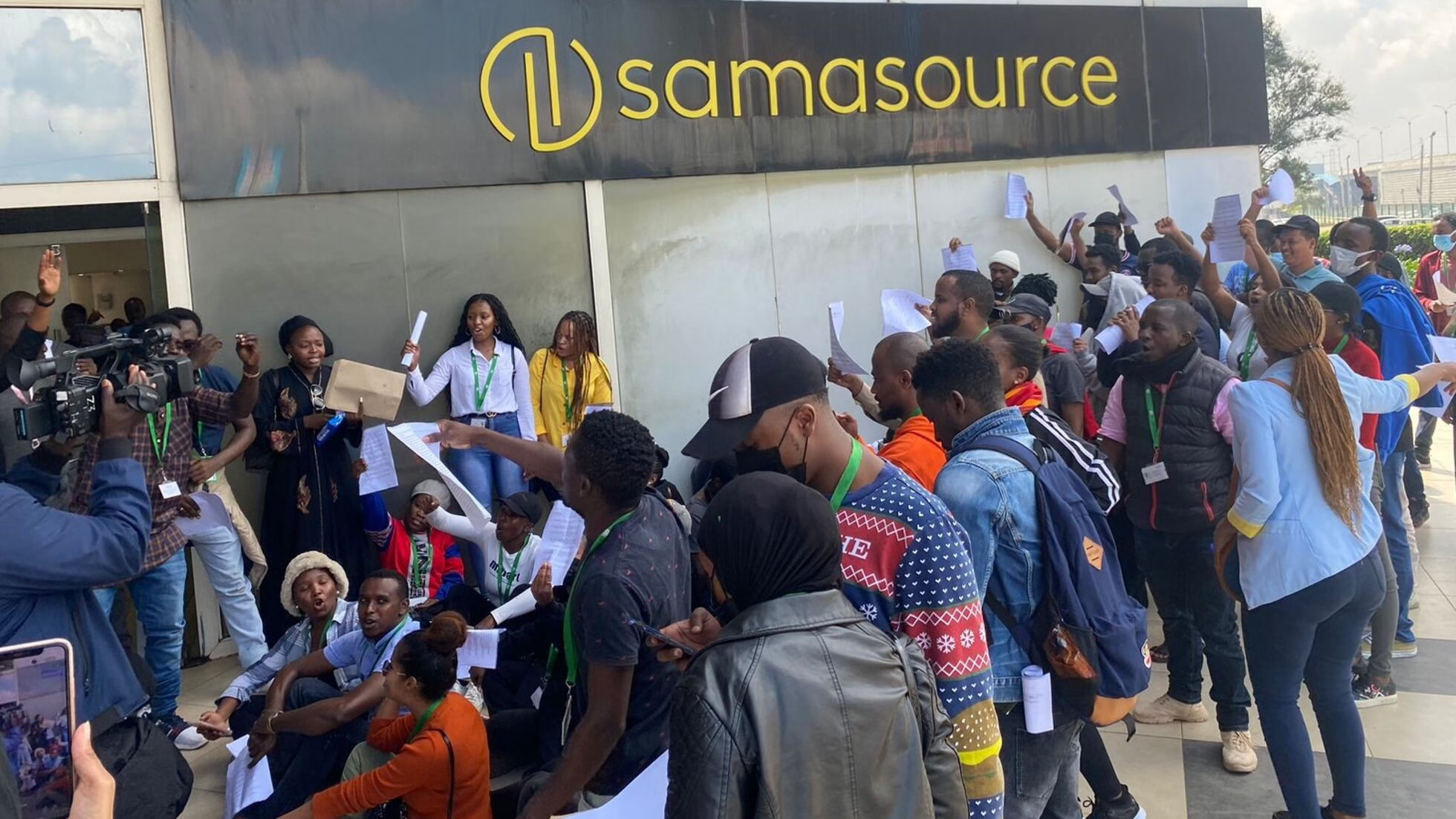
Former content moderators in Nairobi, employed by the outsourcing firm Sama to work on behalf of Meta, have sued both companies. They claim they were subjected to unsafe working conditions, inadequate pay, and serious psychological harm. Many reporters suffer from post-traumatic stress disorder, depression, and anxiety. Their work allegedly involved viewing violent and sexual material for prolonged hours without sufficient counselling or mental health support. Some say they were pressured to continue working despite distress, creating what they describe as a coercive environment.
Court Proceedings and Rulings
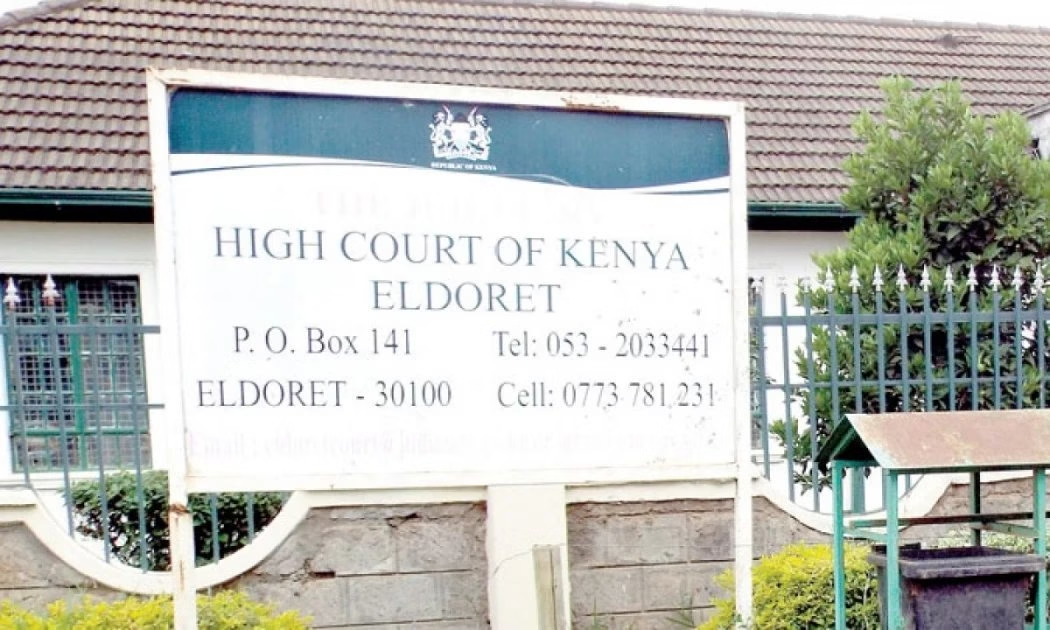
In 2022, the Employment and Labor Relations Court in Nairobi held that Meta could be sued in Kenya even though it engaged the moderators through a contractor. The court ruled that the issues raised were directly linked to Kenya’s labor law and constitutional rights and that jurisdiction could not be avoided simply because the principal company was based abroad. The court issued temporary orders to stop mass layoffs and required contracts to be maintained until the matter was concluded.
Meta appealed, arguing that it was not the legal employer and that Kenyan courts lacked authority over it. In 2024, the Court of Appeal dismissed this argument and upheld the lower court’s finding that the case could proceed in Kenya. This ruling established that foreign companies using local contractors could still face Kenyan legal proceedings if their business activities affected workers in Kenya.
In 2025, both Meta and the moderators agreed to pursue mediation. The court appointed a former Chief Justice and the Labor Commissioner to act as mediators. The moderators are seeking compensation amounting to billions of shillings for unsafe working conditions, low wages and the mental harm suffered during their employment.
Proposed Legislation and Government Position
President William Ruto has publicly supported new legislation that would limit the ability of Kenyan courts to hear cases against foreign companies that outsource their work to local contractors. The bill, presented in the Senate, aims to protect Kenya’s image as a destination for outsourcing and to encourage foreign companies to continue investing in the country. Supporters argue that this would safeguard thousands of jobs in the outsourcing sector. Critics warn that it could weaken labor protections and make it harder for workers to seek justice, especially when harmed by practices dictated by overseas corporations.
Kenyan Labor Law
The Employment Act of 2007 requires all employers, including contractors to provide fair wages, protect employees from harassment and ensure safe working conditions. The Occupational Safety and Health Act obliges employers to take steps to safeguard the physical and mental health of workers. Courts have consistently affirmed that these duties extend to all employment relationships within Kenya, even in outsourced or subcontracted arrangements. In past rulings, such as David Waweru v Attorney General, Kenyan courts have emphasized that employers must ensure that their workers’ health and safety are protected regardless of the type of contract.
The Constitution of Kenya also protects the right to fair labor practices, freedom from forced labor and freedom from inhuman or degrading treatment. Outsourced work arrangements do not remove these rights. Where a foreign company controls or directs the work being done in Kenya, courts may find that it shares responsibility with the local contractor for any violations.
International Law and Global Context
This dispute also raises issues under international labor law. Kenya is a member of the International Labor Organization (ILO) and has ratified conventions that require safe working conditions, reasonable hours and protection against exploitation. These include the ILO Convention on Occupational Safety and Health and the Convention on the Elimination of Forced Labor.
Furthermore, the United Nations Guiding Principles on Business and Human Rights state that businesses must prevent human rights abuses within their supply chains and provide remedies where harm has occurred. These principles apply regardless of whether a company operates directly or through a contractor.
Globally, content moderators in several countries have raised similar concerns. In the United States, Meta settled a large lawsuit brought by moderators who alleged mental health harm from reviewing harmful online material. In other regions, unions and workers’ alliances have formed to push for better pay, counselling services and the right to organize. In April 2025, an international network of content moderators was launched in Nairobi to demand improved conditions from major technology companies, including Meta, TikTok and Google.
Implications for Kenyan Workers
Outsourcing has brought many job opportunities to Kenya, especially in the technology and customer service sectors. However, it can also expose workers to exploitation when laws are poorly enforced or when liability is shifted between local contractors and foreign companies. If the proposed law limiting lawsuits passes, workers harmed in outsourcing arrangements could find it more difficult to seek legal remedies.
The outcome of this case will likely influence how Kenya regulates foreign outsourcing in the future. It may also determine whether global corporations can avoid legal accountability by operating through contractors. For Kenyan workers, it represents an important test of the balance between attracting foreign investment and protecting fundamental labor rights.
Final Remarks
This dispute is more than a conflict between former employees and a multinational corporation. It is a legal test of Kenya’s ability to protect its workers under both domestic and international law in the face of complex global business arrangements. The decision will be closely followed not only in Kenya but also internationally, as it may set a precedent on corporate responsibility in outsourced labor relationships.
Sources
- Kenyan Employment Act 2007
- Occupational Safety and Health Act of Kenya
- Constitution of Kenya 2010
- Past case law including David Waweru v Attorney General
- Court rulings by the Employment and Labor Relations Court in Nairobi
- Court of Appeal decisions on jurisdiction over foreign companies operating through local contractors
- Statements and announcements from President William Ruto and the Senate on proposed outsourcing legislation
- International Labor Organization conventions on occupational safety and health, and the elimination of forced labor
- United Nations Guiding Principles on Business and Human Rights
- Public reports and news coverage on Meta and Sama labor disputes in Kenya and internationally
- Information on global content moderator unions and workers’ alliances







Leave a Reply