


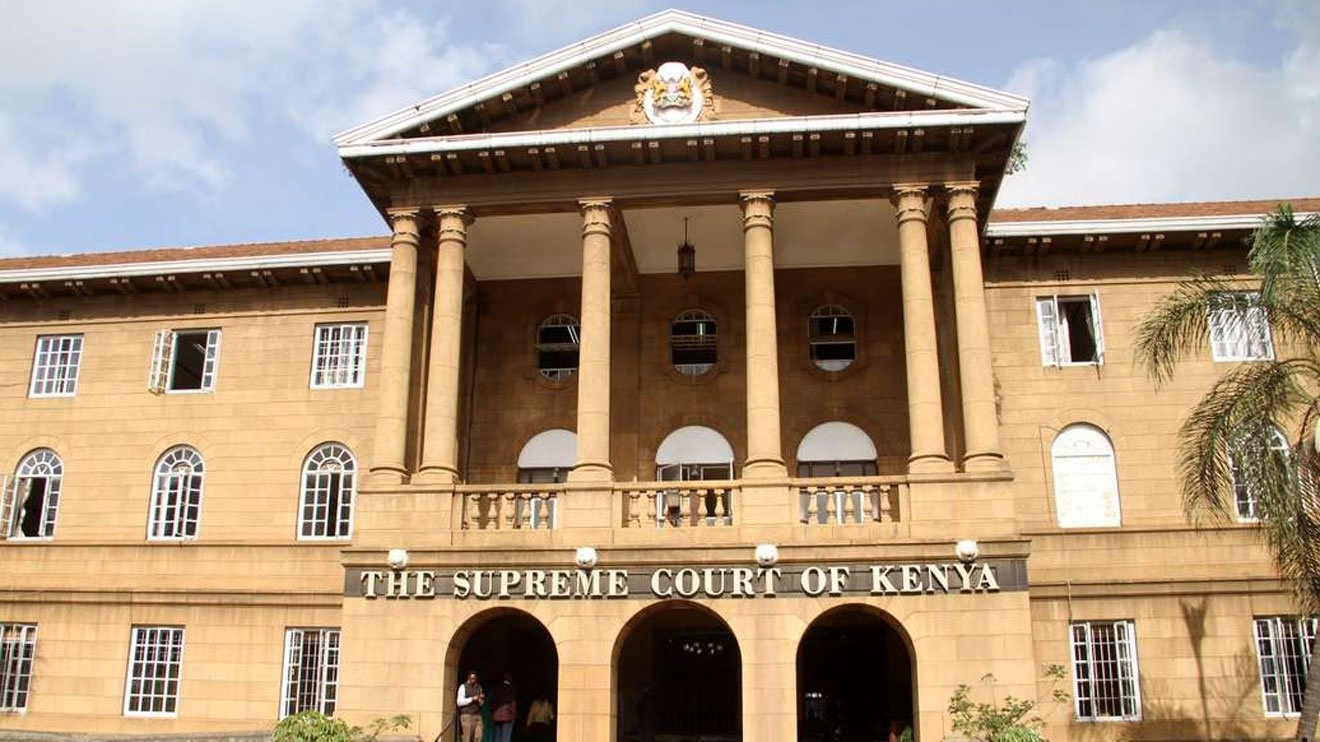
On 11 July 2025 the Supreme Court of Kenya gave an important decision in a case called Wafula v DPP and EACC Petition E045 of 2024. The court ruled that judges in Kenya have the power to direct the Ethics and Anti-Corruption Commission to take action if it fails to carry out its duties. This decision confirmed that courts can make sure public offices do not ignore their legal responsibilities!
The case began when a Kenyan citizen Mr. Wafula reported a corruption issue to the commission. He said the commission did not respond or do anything about his report. Because of this he went to court. The judge ordered the commission to act on the complaint. But the commission disagreed. They argued that since they are an independent body, the court had no power to give them instructions.
The matter went to the Supreme Court for a final answer. The court explained that being an independent body does not mean doing nothing. The commission must still follow the law and respond to genuine complaints. The judges said that if the commission fails to act, then the court can step in and order it to carry out its role.
The Constitution of Kenya gives the High Court power to review decisions or failures by any public body. This is stated in Article 165. It means that courts can check how commissions carry out their duties. If a body like EACC fails to act when it should, the court can make an order to correct that failure.
The judges also made it clear that this power does not take away the job of the commission. The court does not take over investigations. It simply ensures that a public office does not ignore its work. Everyone who holds public power must use it fairly and responsibly.
The ruling protects the right of every Kenyan to seek help from the court when a public office does not respond. The court confirmed that silence from an office like EACC is not allowed under the law. The public must be able to trust that watchdog bodies will act when complaints are made.
This case also shows that the courts play an important role in holding public institutions to account. If an office created to fight corruption does not carry out its role, then the court can give it a lawful reminder to act.
The court’s decision supports the principle that justice should never stop because someone refused to do their job. Every public body must be ready to serve the public and follow the law.
In short, the Supreme Court said that courts in Kenya can help citizens get action when public bodies fail to act. The law does not allow silence or delay. It expects every public officer to act when needed and be open to review. Review the whole case HERE














Leave a Reply