


Background
The appointment of new members to the Independent Electoral and Boundaries Commission (IEBC) has sparked significant developments in Kenya’s electoral system. President William Samoei Ruto, acting under the authority of the Republic of Kenya, oversees the selection of Erastus Ederohon as Chairperson and commissioners Ann Njeri Nderitu, Moses Alutalala Mukhwana, Francis Kareen Sorobi, Fatuma Noor Hassan, and Fahmia Orphat Abdallah, each serving a six-year term, guided by the Constitution of Kenya and the Independent Electoral and Boundaries Commission Act. This process leverages the legal mechanism where the President, after consulting with a parliamentary committee and securing National Assembly approval, appoints these key figures to manage elections, referenda, and boundary changes across the country.
Legal Framework
Building on this background, the IEBC’s role and the appointment process draw their authority from Article 88 of the Constitution, which establishes an independent body to oversee electoral processes, while the Independent Electoral and Boundaries Commission Act, under Section 5(2), provides further guidance. The President executes these appointments within the established rules to ensure the commission remains stable and effective. Each appointee’s six-year term aligns with the Constitution’s goal to deliver long-term leadership and minimize political influence, a critical factor for sustaining public trust in the electoral system. The government publishes the official record of these changes in The Kenya Gazette, a vital document recognized by the Interpretation and General Provisions Act.
Appointment Details
Transitioning to the specifics, the appointments name Erastus Ederohon as the new Chairperson, a role that directs the commission’s overall strategy and upholds its independence, alongside commissioners Ann Njeri Nderitu, Moses Alutalala Mukhwana, Francis Kareen Sorobi, Fatuma Noor Hassan, and Fahmia Orphat Abdallah. These individuals commit to collaborating on the commission’s duties, with their terms commencing on July 10, 2025. This reshuffling marks a deliberate step toward preparing the IEBC for future elections and boundary reviews, actively seeking to rebuild public confidence following past disputes over election fairness.
High Court Rulings and Legal Implications
Issue: The legality of the IEBC appointments faced scrutiny, particularly regarding compliance with constitutional procedures and court orders. Key questions arose over the President’s authority to gazette nominees despite interim judicial rulings and the adequacy of public participation and selection fairness.
Rule: The Constitution under Article 88 establishes the IEBC as an independent body, with appointments governed by Section 5(2) of the Independent Electoral and Boundaries Commission Act, requiring presidential consultation with a parliamentary committee and National Assembly approval. Article 165 empowers the High Court to review such actions, while conservatory orders can halt processes pending judicial determination.
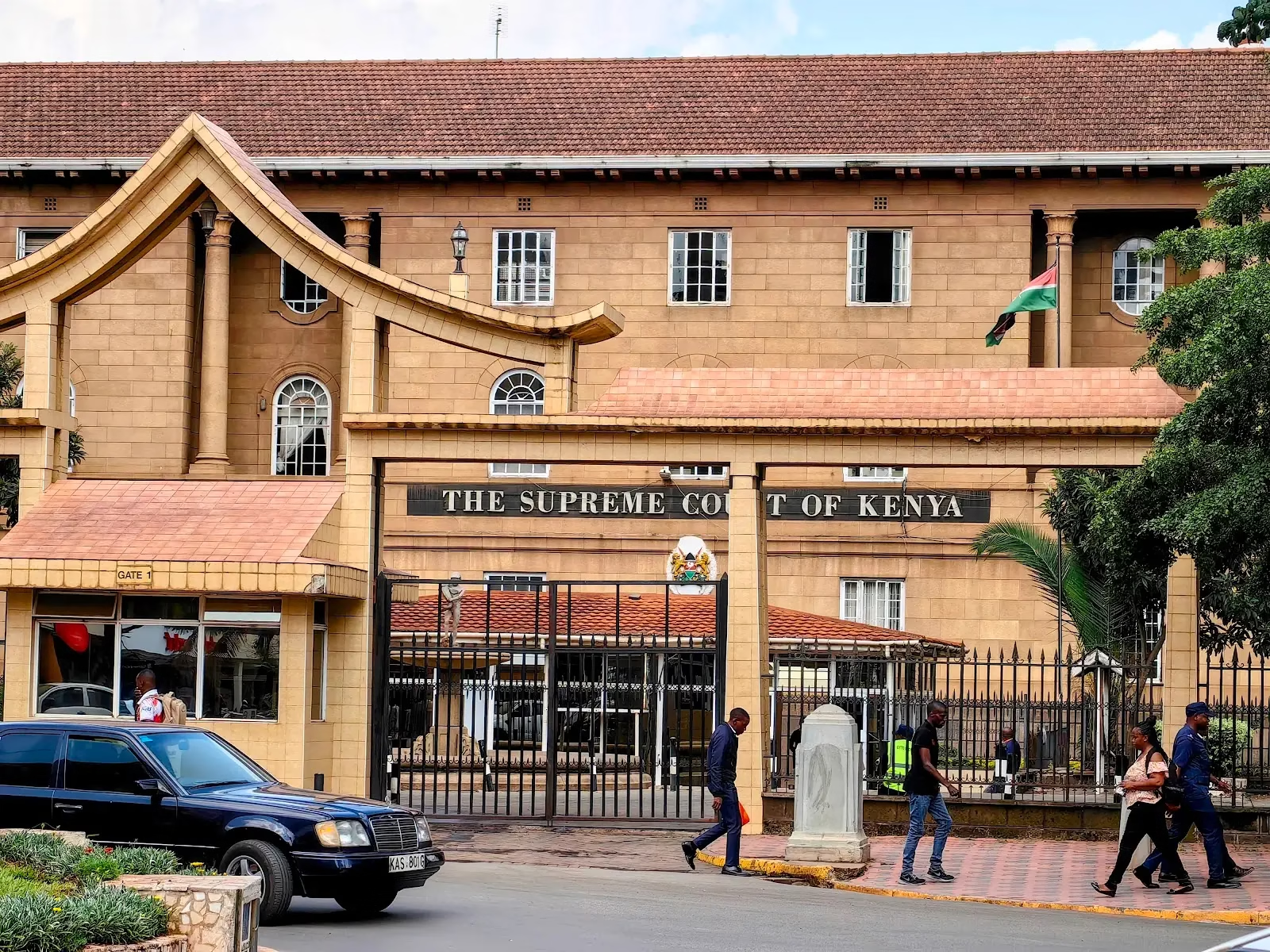
Application: On May 29, 2025, the High Court issued conservatory orders blocking the vetting and approval of the President’s nominees by the National Assembly, addressing a petition challenging the selection process’s legality. On June 4, 2025, Justice Lawrence Mugambi permitted Parliament to proceed with vetting but prohibited gazettement and swearing-in, balancing executive action with judicial oversight. Despite this, President Ruto gazetted the appointments on June 10, 2025, via Gazette Notices No. 7724 and 7725, prompting further action. On July 10, 2025, a three-judge bench comprising Justices Roselyne Aburili, John Chigiti, and Bahati Mwamuye quashed these notices, finding a breach of the May 29 orders and violations of public participation and constitutional standards under Article 88 and Chapter Six. Earlier, on March 25, 2025, the High Court upheld the selection panel’s process, dismissing claims of exclusion of persons with disabilities or lack of gender and regional balance, though it did not address subsequent procedural lapses.
Conclusion: The court determined that while the initial selection process was valid, the gazettement violated interim orders, necessitating re-gazettement. The judges identified key issues as procedural breaches, inadequate public participation, and potential constitutional non-compliance, though the substantive petition lacked merit. This ruling allows the President to regularize the process, reinforcing the IEBC’s independence as a democratic cornerstone, though challenges over qualifications or fairness could persist. The High Court, under Article 165, remains poised to review further disputes if filed within 30 days.
Potential Challenges and Conclusion
Finally, while the appointments align with legal standards following the court’s guidance, potential challenges may arise if people question the fairness or transparency of the re-gazetted process. The success of this new team hinges on their ability to remain impartial, operate openly, and earn the public’s trust, all of which are vital for strengthening Kenya’s democratic system. This update to the IEBC leadership, effective from July 10, 2025, lays the foundation for a critical period in the country’s electoral future, with the High Court’s oversight ensuring adherence to constitutional principles.














Leave a Reply